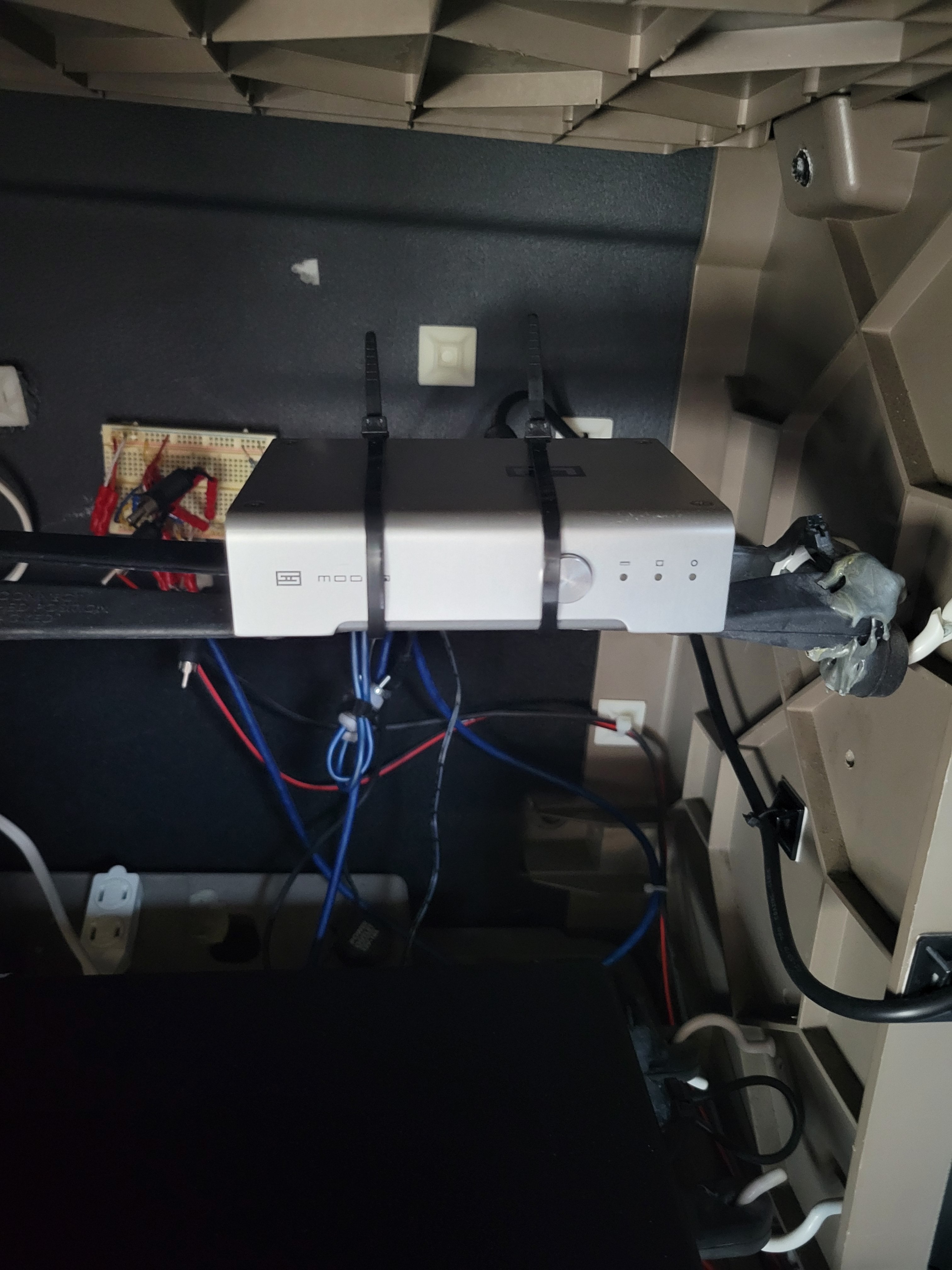
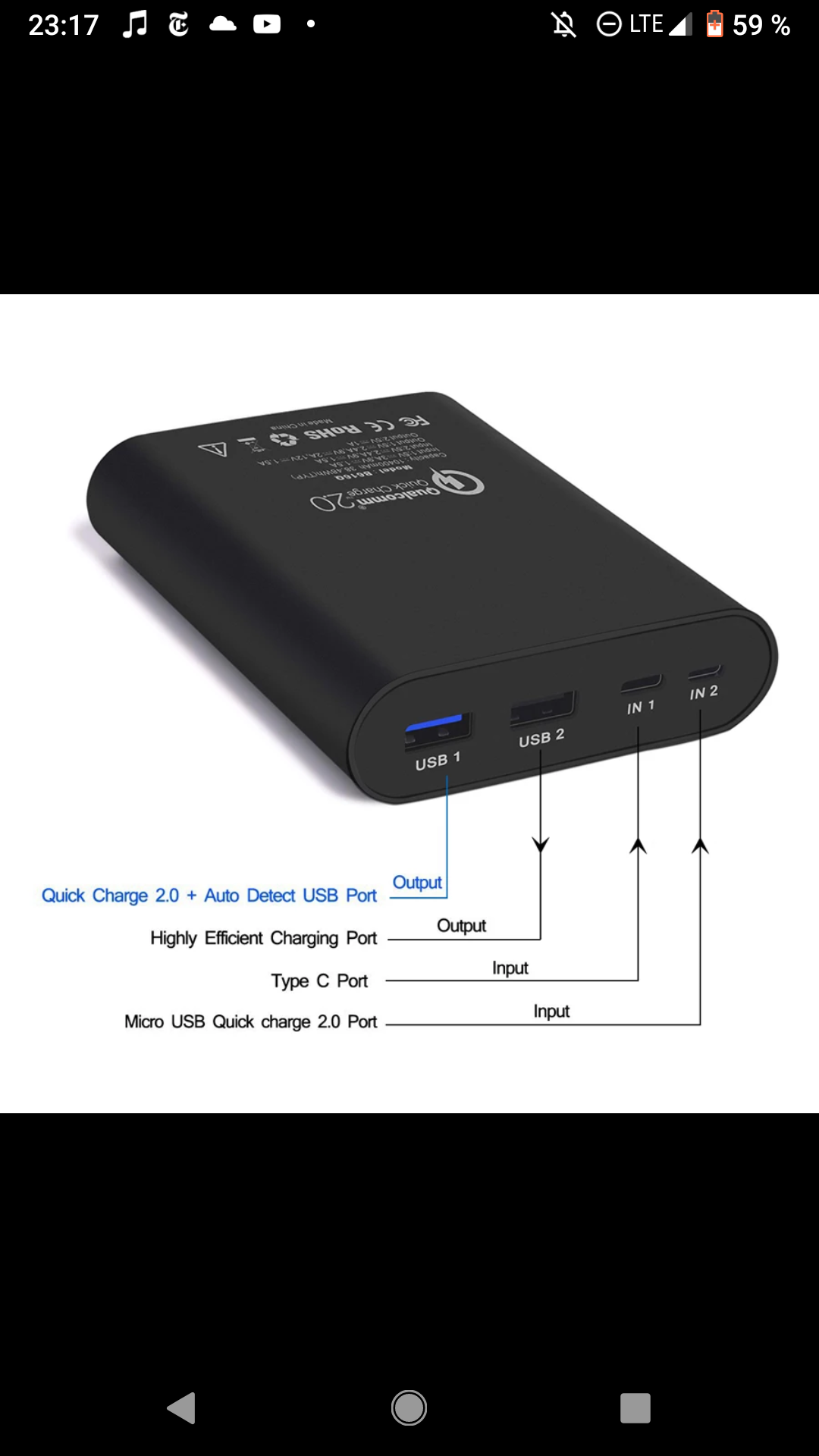
Samsung Galaxy S3 & Graham Slee Bitzie USB DAC with analogue output stage volume control:
"The only great sounding USB DAC to work with a mobile phone...
Plug & play compatible with Samsung Galaxy S3 running Android Jellybean. Over 7 hours continuous playing time!"
"OK, quality into high impedance headphones? HD250II: too good! K701: I'm shocked! HD800: almost very natural! All three very revealing... HD800 doing guitar string slides and moist mouth vocals extremely real."
"It's also got an output stage... yes AN OUTPUT STAGE! Which drives headphones direct - any impedance - with only 18 Ohms output impedance. It does not go direct from the DAC outs without any filtering like most do! The output has a thing called gain and it also has proper sampling frequency filtering that's effective and yes it's fast (some people call it PRAT but I call it fast) It also does line level, and there is a 3 position switch hidden away under the USB socket to let you preset the volume to suit - and you can press it to mute - and press it again to un-mute... snazzy!"
"The volume control is between the analogue output of the DAC chip and the input of the analogue output stage. Therefore it can be used to set the volume of the headphones or the volume of the amp it's serving depending on use.
The output voltage is 0 - 2V. It provides 9dB extra sound pressure level to 32 Ohm headphones (e.g. 107dB max SPL from Grado headphones with suffix i), 11dB extra sound pressure level into 300 Ohm headphones (e.g. 113dB max SPL from HD800's), and 12dB extra sound pressure level into 62 Ohm headphones (e.g. 117dB max SPL from AKG K701's). Roughly the equivalent of the Voyager.
The analogue stage also contains a low pass filter (LPF) having a third order Butterworth filter slope, acting above the audio spectrum which is facilitated by the DAC using 8Fs oversampling. The filter being designed to produce a SQ and sound stage not dissimilar to a Reflex M"
"The Bitzie USB-DAC (external sound-card) is a USB powered device which automatically recognises any USB audio bit depth and sampling frequency. It then sends it in S/PDIF format to a coaxial out (phono socket) or optical transmitter at "CD quality" (16/44.1 (48)), and it also has an analogue audio output. The analogue audio output is derived from an 8Fs oversampling D-A converter and presented to an Alps manual rotary volume control and then to a low pass filter (LPF) amplifier with +6dB gain. The output of this amplifier is presented on two jacks: a mini jack and a full size 1/4" jack in parallel. A pair of headphones can be connected to the jack suitable for the headphone plug. The amplifier which is short circuit proof will drive any headphone impedance. Alternatively using a jack to 2 x phono adapter, the analogue output may be used to drive an amplifier.
The S/PDIF outputs of the Bitzie USB DAC have been tested into the "big DAC" prototype S/PDIF coaxial and optical inputs, and the analogue outputs into the Proprius monoblock power amplifiers. The analogue outputs have also been tested using HD800, HD250II, HD600, SR60, SR80, K701, A-700 and A-900 headphones. All work exceedingly well."