
Quote:
Originally Posted by
bigshot 
That isn't true. 10-20kHz is only one octave, and it's right at the edge of a human's ability to hear. In this range, the only thing in music is upper level harmonics in cymbals. There was a test done where they rolled off everything above 10kHz and people compared it to full frequency response samples. Although people could hear a difference in direct comparison, they had no preference between them when it came to sound quality.
Sound quality exists in the middle of the hearing range, not the fringes.
There's a big difference between "roll off" (how much? dB / decade?) and "cut off".
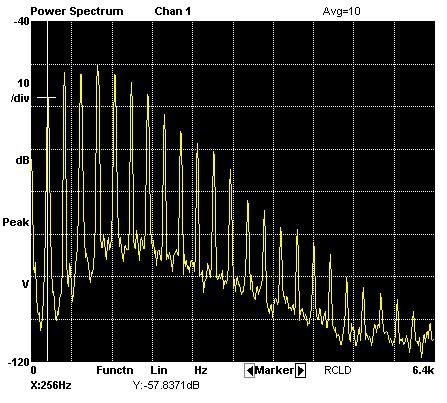
Anybody have spectral plots of instruments playing? I'd imagine some more noise-like percussive sounds should extend far above 20 kHz, maybe with non-trivial energy, not that the extension is really of interest for listening to it. For synthesized sounds, no reason it should stop at any particular frequency.
Unless some tonal instrument has really strong 6+ order harmonics, it's not really going to extend much past 20 kHz. I mean, top key of piano and high-register piccolo squealing range is around 4 kHz fundamental, so 5th harmonic at 20 kHz.