








Zombie_X
Headphoneus Supremus
Hi All,
[size=10.0pt]This is Zombie_X chiming in here. I have started this large information thread to help those who want a beyerdynamic headphone, but do not know what they sound like and or trying to pick one to suit their set-up. Since I have heard all of the models from 32Ohm-600Ohm's in their current production line, I thought I'd make this thread.[/size]
[size=10.0pt]I thought for once and for all I would do something about the abundance of threads regarding sonic differences between all the DT770, DT880, and DT990 models at all impedances. This thread will be the most comprehensive one ever to be around that will cover all the DT770-DT990 series in the 32Ohm-600Ohm range. I have heard every one currently in productions and will describe all their differences, strengths, weaknesses, and how they should be amped.[/size]
DISCLAIMER:
I also wanted to add in that the differences between them is not as huge as some members lead you to believe. As I stated in another thread, for example, the DT880 250Ohm and the 600Ohm versions still sound very similar. The 600Ohm DT880 has more bass, smoother highs, and more midrange. These differences are there but not huge. The DT880 600Ohm may have smoother highs, but they are still prominent and can be edgy to some. It may even have more midrange, but ti's still recessed to a point and lacks some body. I just wanted to throw this out there so you don't get confused and think the sound signature of these is different from other Ohm models.
The 600Ohm models still retain nearly all the sound signature of their 250Ohm versions, just improved upon and tend to have a more natural and balanced frequency response.
[size=10.0pt]____________________________________________________________________________[/size]
[size=10.0pt]____________________________________________________________________________[/size]
BRIEF DESCRIPTION OF THEIR SOUND
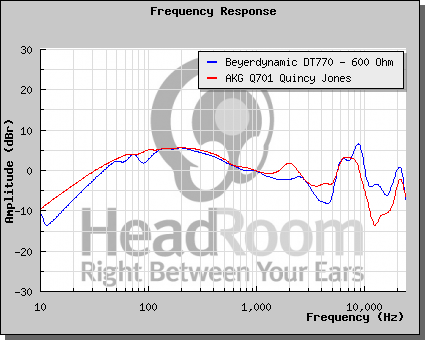
DT770: Can be said to have stronger treble with weaker bass and a more hollow midrange with a closed in sound. Overall a nice balanced sound.
DT880: Has a very linear sound that is incredibly neutral. Still has the strong treble but also has more midrange and bass with an improved soundstage. The most neutral of the DT770-DT990 series line up.
DT990: Has a very strong treble emphasis with shallower sounding mids and more prominent bass. It could be said that this is the beyerdynamics' "fun" headphone. The soundstage is also the biggest of the DT770-DT990 series line up.
[size=10pt]____________________________________________________________________________[/size]
[size=10pt]____________________________________________________________________________[/size]
VIDEO DESCRIPTIONS
[size=10pt]____________________________________________________________________________[/size]
[size=10pt]____________________________________________________________________________[/size]
DRIVER/CUP/TUNING DIFFERENCES
As you know the DT880, DT990, and DT770 drivers are all constructed differently. Any easy way to look at it as all DT880 250Ohm drivers are the same. All DT990 250Ohm drivers are the same. All DT770 250Ohm drivers are the same. So premium and Pro 250Ohm driver are the same within that models line.
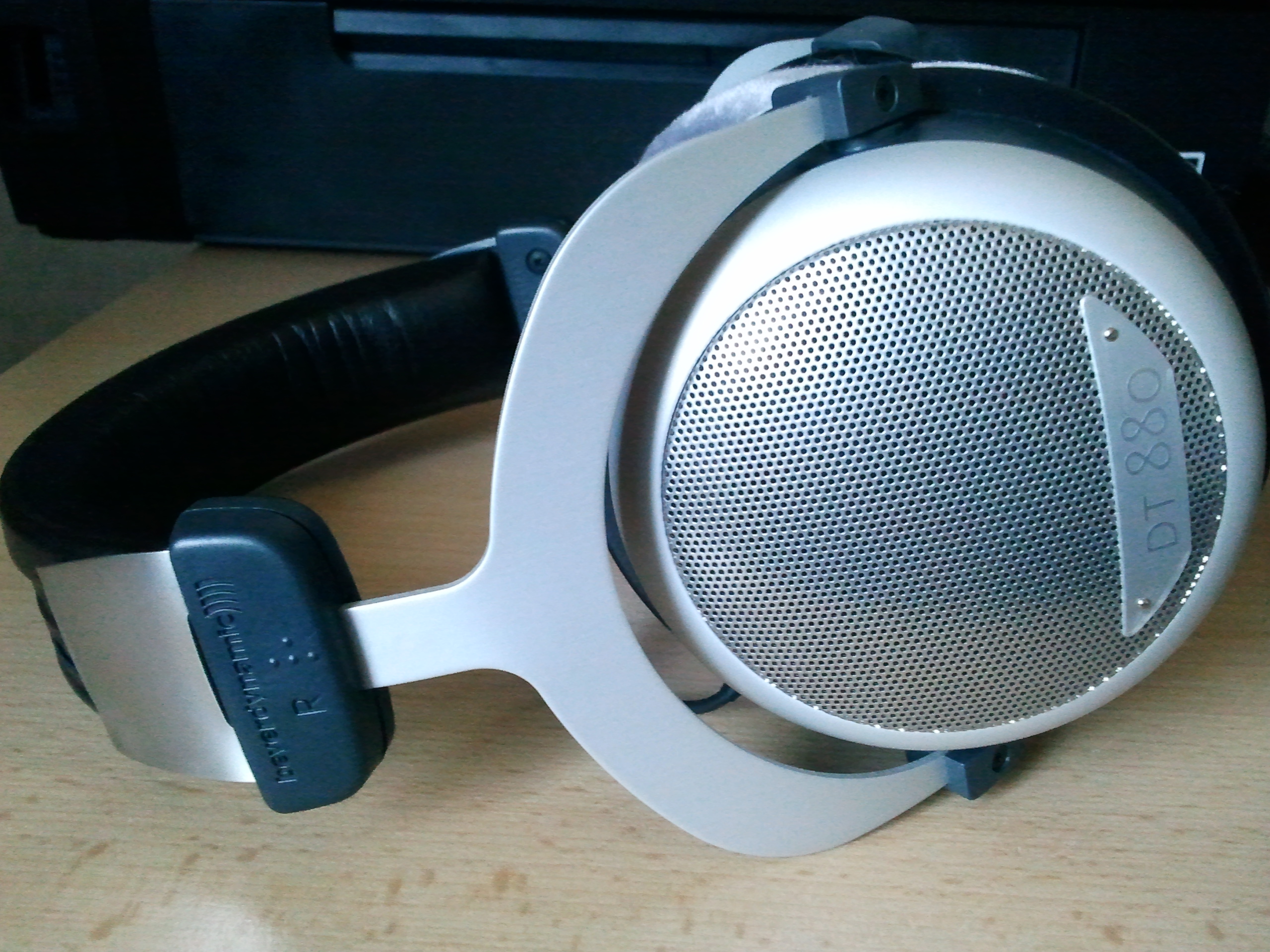
DT880 32Ohm / 250Ohm / 600Ohm: Having the black felt in front of the driver and mesh over the magnet. The felt tames the highs a bit and the mesh is used to tune the driver somehow, though I am not sure. I suspect the mesh limits airflow and decreases the soundstage. The inside of the cups have small vents that are quite small. The center of the cup is a circular opening. This headphone is labeled as semi-open but I still consider it open, just not as open as say other headphones. On the back, on the inside of the cup, there is a think ring of felt with a opening cut in it so the headphone can vent through the cup. The felt helps to dampen back waves and reduce coloration.
DT990 32Ohm / 250Ohm / 600Ohm: Not having either of those and thus sounds more open. With the felt gone the sound would be much more open and also brighter. Without the mesh the soundstage, in theory, should be bigger. As with the DT880, there is a ring of felt in the cup on the inside that has a area cut out so the headphone can vent. The DT990 has much bigger vents than the DT880 and thus leaks more sound out. This leads to an arier and more open sound with less coloration due to sound reverberations within the cup.
DT770 32Ohm / 250Ohm / 600Ohm: The main thing is that the DT770 does not have the mesh nor felt covering the driver, but has a plastic ring with spokes that goes around the entire back of the driver. Well not the entire back of the driver but the main art of it in the center with the diaphragm and magnet. The ring/spokes are lined with a thick ring of felt around the outside of the plastic ring/spokes. This tunes the driver somehow and limits some airflow. The exact specifics I do not know. The next thing is that the ear cups have a bass port on them. This tunes the bass so it won't be as boomy I suspect.
DT770 / 80Ohm: Has and enclosed/vented magnet area but nothing covering the driver. The enclosed magnet area should reduce the soundstage and lead to having more bass impact. The center of said enclosure is open in the center and has a sort of felt inlay in it. Also this model, as other DT770 models, has the additional plastic ring that goes around the magnet and is covered with felt as well as a bass port on each cup. This model is tuned a lot differently than the other DT770 models.
[size=10pt]____________________________________________________________________________[/size]
[size=10pt]____________________________________________________________________________[/size]
SOUND CHARACTERISTICS
[size=18.0pt]DT770[/size]
[size=10.0pt]This is Zombie_X chiming in here. I have started this large information thread to help those who want a beyerdynamic headphone, but do not know what they sound like and or trying to pick one to suit their set-up. Since I have heard all of the models from 32Ohm-600Ohm's in their current production line, I thought I'd make this thread.[/size]
[size=10.0pt]I thought for once and for all I would do something about the abundance of threads regarding sonic differences between all the DT770, DT880, and DT990 models at all impedances. This thread will be the most comprehensive one ever to be around that will cover all the DT770-DT990 series in the 32Ohm-600Ohm range. I have heard every one currently in productions and will describe all their differences, strengths, weaknesses, and how they should be amped.[/size]
DISCLAIMER:
I also wanted to add in that the differences between them is not as huge as some members lead you to believe. As I stated in another thread, for example, the DT880 250Ohm and the 600Ohm versions still sound very similar. The 600Ohm DT880 has more bass, smoother highs, and more midrange. These differences are there but not huge. The DT880 600Ohm may have smoother highs, but they are still prominent and can be edgy to some. It may even have more midrange, but ti's still recessed to a point and lacks some body. I just wanted to throw this out there so you don't get confused and think the sound signature of these is different from other Ohm models.
The 600Ohm models still retain nearly all the sound signature of their 250Ohm versions, just improved upon and tend to have a more natural and balanced frequency response.
[size=10.0pt]____________________________________________________________________________[/size]
[size=10.0pt]____________________________________________________________________________[/size]
BRIEF DESCRIPTION OF THEIR SOUND
DT770: Can be said to have stronger treble with weaker bass and a more hollow midrange with a closed in sound. Overall a nice balanced sound.
DT880: Has a very linear sound that is incredibly neutral. Still has the strong treble but also has more midrange and bass with an improved soundstage. The most neutral of the DT770-DT990 series line up.
DT990: Has a very strong treble emphasis with shallower sounding mids and more prominent bass. It could be said that this is the beyerdynamics' "fun" headphone. The soundstage is also the biggest of the DT770-DT990 series line up.
[size=10pt]____________________________________________________________________________[/size]
[size=10pt]____________________________________________________________________________[/size]
VIDEO DESCRIPTIONS
[size=10pt]____________________________________________________________________________[/size]
[size=10pt]____________________________________________________________________________[/size]
DRIVER/CUP/TUNING DIFFERENCES
As you know the DT880, DT990, and DT770 drivers are all constructed differently. Any easy way to look at it as all DT880 250Ohm drivers are the same. All DT990 250Ohm drivers are the same. All DT770 250Ohm drivers are the same. So premium and Pro 250Ohm driver are the same within that models line.
DT880 32Ohm / 250Ohm / 600Ohm: Having the black felt in front of the driver and mesh over the magnet. The felt tames the highs a bit and the mesh is used to tune the driver somehow, though I am not sure. I suspect the mesh limits airflow and decreases the soundstage. The inside of the cups have small vents that are quite small. The center of the cup is a circular opening. This headphone is labeled as semi-open but I still consider it open, just not as open as say other headphones. On the back, on the inside of the cup, there is a think ring of felt with a opening cut in it so the headphone can vent through the cup. The felt helps to dampen back waves and reduce coloration.
DT990 32Ohm / 250Ohm / 600Ohm: Not having either of those and thus sounds more open. With the felt gone the sound would be much more open and also brighter. Without the mesh the soundstage, in theory, should be bigger. As with the DT880, there is a ring of felt in the cup on the inside that has a area cut out so the headphone can vent. The DT990 has much bigger vents than the DT880 and thus leaks more sound out. This leads to an arier and more open sound with less coloration due to sound reverberations within the cup.
DT770 32Ohm / 250Ohm / 600Ohm: The main thing is that the DT770 does not have the mesh nor felt covering the driver, but has a plastic ring with spokes that goes around the entire back of the driver. Well not the entire back of the driver but the main art of it in the center with the diaphragm and magnet. The ring/spokes are lined with a thick ring of felt around the outside of the plastic ring/spokes. This tunes the driver somehow and limits some airflow. The exact specifics I do not know. The next thing is that the ear cups have a bass port on them. This tunes the bass so it won't be as boomy I suspect.
DT770 / 80Ohm: Has and enclosed/vented magnet area but nothing covering the driver. The enclosed magnet area should reduce the soundstage and lead to having more bass impact. The center of said enclosure is open in the center and has a sort of felt inlay in it. Also this model, as other DT770 models, has the additional plastic ring that goes around the magnet and is covered with felt as well as a bass port on each cup. This model is tuned a lot differently than the other DT770 models.
[size=10pt]____________________________________________________________________________[/size]
[size=10pt]____________________________________________________________________________[/size]
SOUND CHARACTERISTICS
[size=18.0pt]DT770[/size]
The DT770 is beyerdynamic’s answer to those who wanted a closed headphone with balanced sound with good isolation. It’s four versions are all good, but they have varying sound signatures. It has the most balanced sound amongst all three lines.
[size=10.0pt]- 32Ohm[/size]
[size=10.0pt]- 32Ohm[/size]
The 32Ohm model of the DT770 is closer sounding to the 250Ohm and 600Ohm models than it is to the 80Ohm model. The most striking difference is that they have far less bass than the 80Ohm model, but also are fuller sounding. The bass on the 32Ohm's is tight and controlled but rather light on impact. If I had to rate it's impact I would say it's like the DT880/250, but even less than those. The high while quite extended and detailed but has a slight edge to them, but not grating or strident sounding. All of the DT line (DT770-DT990) has a treble oriented sound, so the DT770 will emphasize this. Now the mids, while fuller than the 250Ohm and 80Ohm models, are there but still recessed to a degree. The mids are clear, detailed, and possess decent transparency. Now the soundstage is smaller than the 80Ohm and 250Ohm and has an "in your head" sound to it. The dynamics of this model seem slightly lower compared to the 250Ohm version, but it’s hard to tell.
[size=10.0pt]- 250Ohm[/size]
[size=10.0pt]- 250Ohm[/size]
This Ohm version is good improvement over the 320hm version. It has improved dynamics and transients are pretty good. The bass while, tight and controlled is kind of slow sounding. The bass seems to extend just as much as the 32Ohm model but has a little less weight to the bass. Now the mids are more recessed or shallow sounding on this model compared to the other two models, but are more detailed and transparent than the lower models. The treble though is rather strident sounding and this can has more treble than the lower two versions. The treble seems to take over the sound on modern mastered stuff. One thing to note is that the treble is more extended as well and even more detailed. Now the soundstage on this model is pretty good for a closed headphone, but still rather closed in.
[size=10pt]- 80Ohm (PRO)[/size]
[size=10pt]- 80Ohm (PRO)[/size]
The 80Ohm model has the most bass out of all the DT770 models. The bass is nice and pronounced with having good impact and depth, though when under amped it can have a mind of it's own. When underamped the bass gets bloated and flabby. The mids are probably the fullest of the DT770 line up but still on the recessed side. The treble is presented nicely although it sounds like it slightly rolled off. The treble is also the smoothest of the DT770 line. The soundstage is smaller then the rest though and certainly smaller than the DT770/250Ohm, most likely due to the bass and treble. This ehadphone it really good for rock, rap, metal, and any other bassy music genre's.
[size=10.0pt]-250Ohm (PRO)[/size]
[size=10.0pt]-250Ohm (PRO)[/size]
The Pro version sounds almost the same but the thing that is most different is the clamping force of the headband. It clamps quite tight, while the other models have a looser fit. Also the soundstage on this model seems smaller cause of the clamp and the bass is also pronounced because of the clamp as well. Other than that it sounds the same.
[size=10.0pt]- 600Ohm[/size]
[size=10.0pt]- 600Ohm[/size]
This is the best model of this headphone available. It has very smooth treble in comparison to the other Ohm models and is even more extended and detailed. The treble also no longer seems to trample over the other frequencies, but is more integrated with them. The midrange on this headphone is far better than the other Ohm DT770 models. Because the treble has been smoothed out and toned down a little bit, the midrange has made a nice appearance and is also very transparent sounding with lots of detail. The mids are just right in my mind on this phone and the best of the DT770 line. Now the bass on these is full, has nice texture, and has more weight to it. It’s definitely more pronounced than its 250Ohm counterpart. Also the bass is much faster sounding on this model and is also deeper sounding as well. The soundstage is also bigger than the other three models and possesses nice depth, width, and height.
Also there seems to be another variation of the 600Ohm model floating around which has just as much bass as the 80Ohm model. I have heard the new 600Ohm model first hand and it sounds incredibly similar to the muddy sounding 80Ohm version. The new version is very tight in the bass and does not have that overly boomy sound to it's bass, well it does bu not as bad. The treble is no longer smeared and the mids don't sound as cluttered.
EDIT: The treble in comparison to the DT990 is nearly on the same level and is also not shrill or strident. Despite me saying the treble is smooth, it's still very prominent and pronounced.
DT880
EDIT: The treble in comparison to the DT990 is nearly on the same level and is also not shrill or strident. Despite me saying the treble is smooth, it's still very prominent and pronounced.
DT880
The DT880 is a semi-open/semi-closed headphone that aims at combining the strengths of both designs into one headphone. It’s a very neutral headphone that does seem to emphasize any frequency. The treble is still more emphasized on this model compared to the DT770.
[size=10.0pt]- 32Ohm[/size]
[size=10.0pt]- 32Ohm[/size]
The 32Ohm model yet again, like the DT770, sounds more like the 600Ohm version rather than the 250Ohm model. It has nice treble that is extended nicely, but less detailed than the other models. The midrange is also fuller than the 250Ohm model, but still on the hollow side of things. Bass is nice and tight with good texturing and depth, but lacks in speed/dynamics.
[size=10.0pt]- 250Ohm[/size]
Sep 19, 2010 at 6:59 PM
Post #2 of 1,845
Sep 19, 2010 at 7:00 PM
Post #3 of 1,845
[size=10.0pt]- 250Ohm[/size]
This model tends to have a somewhat brittle sounding treble or otherwise known as thin. It is a pretty bright phone, but the treble is nicely detailed and extends more than the lower DT770 models. The midrange on this phone is a bit shallower sounding than the 600Ohm version, but is fuller than the 250Ohm DT770. It is still recessed sounding and also has more detail to it than the other versions, just not as much body. Bass on this model has great texture to it and is able to layer the instruments. So what I mean is that you can tell what bass is from what instrument. Does that even make sense? Oh but the soundstage on this model is exceptional and layers the instruments very nicely. The imaging also is better than the DT770’s non 600Ohm models and better than the lower DT880 models.
[size=10.0pt]- 250Ohm (Pro)[/size]
[size=10.0pt]- 250Ohm (Pro)[/size]
Just like the Pro DT770, the same applies here. Less soundstage, more bass, and even more clamp. That’s about it. The drivers are the same as the normal 250Ohm model. Treble also seems to affected slightly and is a tad smoother.
[size=10.0pt]- 600Ohm[/size]
[size=10.0pt]- 600Ohm[/size]
Man the treble is good on this model! It has more sparkle than the 600Ohm DT770, but still remains smooth with awesome detail. Really the treble on this one surpasses all the DT770 models in terms of detail and extension. The bass on the 600Ohm DT880 is also really full in comparison to the lower models in the DT880 line up. In my opinion though the DT770 600Ohm still has a slightly fuller sound midrange. Now onto the bass one these headphones. One word can sum it up and it’s just AWESOME. It retains all the DT880 250Ohms detail, texture, and layering but improved on it and gives you more body and impact. It’s nice and full bass that is very fast and seems so natural. The soundstage has a great improvement on these phones as the other two lower models seemed confined sounding in comparison. It’s pretty wide with some nice depth to it. The layering and imaging of the sound is far better than the other models as well.
[size=18.0pt]DT990[/size]
[size=18.0pt]DT990[/size]
The DT990 is a fully open headphone with very impressive bass. Though the treble is more pronounced in the whole line up of headphones. I classify this headphone as their fun and bassy one. One thing to note that the DT990 has the most recessed midrange of all three lines.
[size=10.0pt]- 32Ohm[/size]
[size=10.0pt]- 32Ohm[/size]
The 32Ohm model for this headphone follows like the previous two lines. It sounds very much like the 600Ohm models, but has a far less refined tone to it. The bass in this model also seems a little sloppy compared to its other two incarnation and is slower sounding as well. The soundstage is still smaller like the other two lines, but bigger than the 32Ohm DT880. The midrange is fuller than the 250Ohm model, but is a lot more hollow sounding than the 32Ohm DT880. The soundstage is also wider than the 32Ohm DT880 with better imaging.
[size=10.0pt]- 250Ohm[/size]
[size=10.0pt]- 250Ohm[/size]
The treble us a bit far too pronounced and covers the midrange, though it has better detail and extension over the other DT770 and DT880 models. It’s somewhat strident and can cause ear fatigue quite quickly for those who are sensitive to treble. The midrange, as stated above, is very shallow to almost nonexistent. Maybe that’s overstating it, but it’s very shallow sounding, but what can be heard is very detailed and transparent. The 250Ohm DT880 has a much fuller midrange, but the DT990’s has more detail and transparency to it. The bass is very prominent and takes over the sound. It makes the headphone sound darker. The impact on the bass is very impressive for an open headphone and it has more extension than the 250Ohm DT880, but lacks it’s texturing and layering. The soundstage easily beats the 250Ohm DT880 as this ohm rating of the DT990 is much wider and deeper sounding.
[size=10.0pt]- 250Ohm (PRO) [/size]
[size=10.0pt]The pro version follows the trend of the other two lines pro variants with a smaller soundstage, more bass, and more clamp. The treble seems smoother also because of the increased clamping force and aids the mids in coming forward. Bass seems to have gained impact but now there’s slightly more bass. Even more bass than the 600Ohm model, but not as controlled. The treble is smoother now from the added bass as it gets masked a tiny bit. The mids gain some body and the lower mids are more audible.[/size]
[size=10.0pt]- 600Ohm[/size]
[size=10.0pt]- 250Ohm (PRO) [/size]
[size=10.0pt]The pro version follows the trend of the other two lines pro variants with a smaller soundstage, more bass, and more clamp. The treble seems smoother also because of the increased clamping force and aids the mids in coming forward. Bass seems to have gained impact but now there’s slightly more bass. Even more bass than the 600Ohm model, but not as controlled. The treble is smoother now from the added bass as it gets masked a tiny bit. The mids gain some body and the lower mids are more audible.[/size]
[size=10.0pt]- 600Ohm[/size]
The 600Ohm model is the definitive version of the DT990 and has the smoothest treble of the DT990 line. It’s also the most detailed treble of all three lines and offers the most extension. The midrange of this model is close to the 250Ohm DT880 and is rather shallow, but far more improved over the 250Ohm DT990. The DT990 600Ohm’s mids are a little bit more transparent and detailed over its 250Ohm counterpart, but not nearly as full sounding as the 600Ohm DT880. The DT990 still has a slightly more detailed midrange over the 600Ohm DT880. Bass on this model is just insane. It has so much impact and is so tight and controlled sounding it makes you question that’s it’s an open headphone. Also the bass is very snappy and fast, far faster sounding than the other DT990 variants. Really just the most impactfull and controlled bass I’ve heard from an open headphone. The soundstage also beats all the DT770 and DT880 models and is pretty wide and deep. The imaging though is just a bit better than the 600Ohm DT880, but not by much.
________________________________________________________________________________________________
________________________________________________________________________________________________
OTHER MODELS:
REVOX 3100
The Revox 3100 is an OEM version of the DT880 600Ohms and sound nearly the same as the current models but has some noticeable differences.
Side by side you can tell they are a DT880 just from their sound signature but they do have differences. The first difference is that they have a smoother and slightly softer treble. This may be because of their age but I doubt it. Also the next difference is that they have more midrange body. It add a nice body to the sound. It's not as detailed/resolving of a midrange as the current 600Ohm model, but still good. Also the bass is different. The bass has less body and weight to it, but it's also tighter and more realistic, but lacks some of the layering of the current model. The soundstage on the 3100 is also very slightly smaller than the current model. It's still airy but not as wide sounding. Next is the speed of the headphone and I must say it's faster sounding than the current model. Decay is faster and transient speeds is quite obvious between the models. The newer model seems a touch slower in comparison.
So IMO the Revox 3100 is superior to the current DT880/600Ohm. It has more speed, better transients, smoother treble, tighter bass, and more midrange. Clearly I believe it's superior to the current line.
T50P
The T50P is a closed back portable headphone from beyerdynamic that sports their new tesla technology.
Well I usually don't expect much from portable headphones other than them usually being overpriced. I'm happy to say that the T50P is not over priced sounding at all! It has a rich and smooth sound with nice bass impact. Talking about the bass, it has nice impact and is very tight and controlled, easily the best bass I've heard out of any portable headphone. I would say the bass is similar to the DT880 600Ohm's bass, but less impact and body. Next about the treble, it's just absolutely grainless and offers great extension and is very detailed. The treble is also very airy. The midrange is something special my friends. It's a fleshed out midrange that is on the warm side of things. It's very transparent and resolving, especially for a portable headphone. I'd say it's as fleshed out as the T1's midrange, but not nearly as refined, but nonetheless it's something special. The soundstage is about the same as that of the DT770, meaning it's a little closed in sounding. I foudn that there weren't any odd resonances at all. This is great considering it's a closed headphone.
Oh and a word on the fitting for these. I find the best result when you rest them towards the back of your ears so the pads slightly overlap the back of your ears. This way you get a much fuller sound.
T70 / T70P
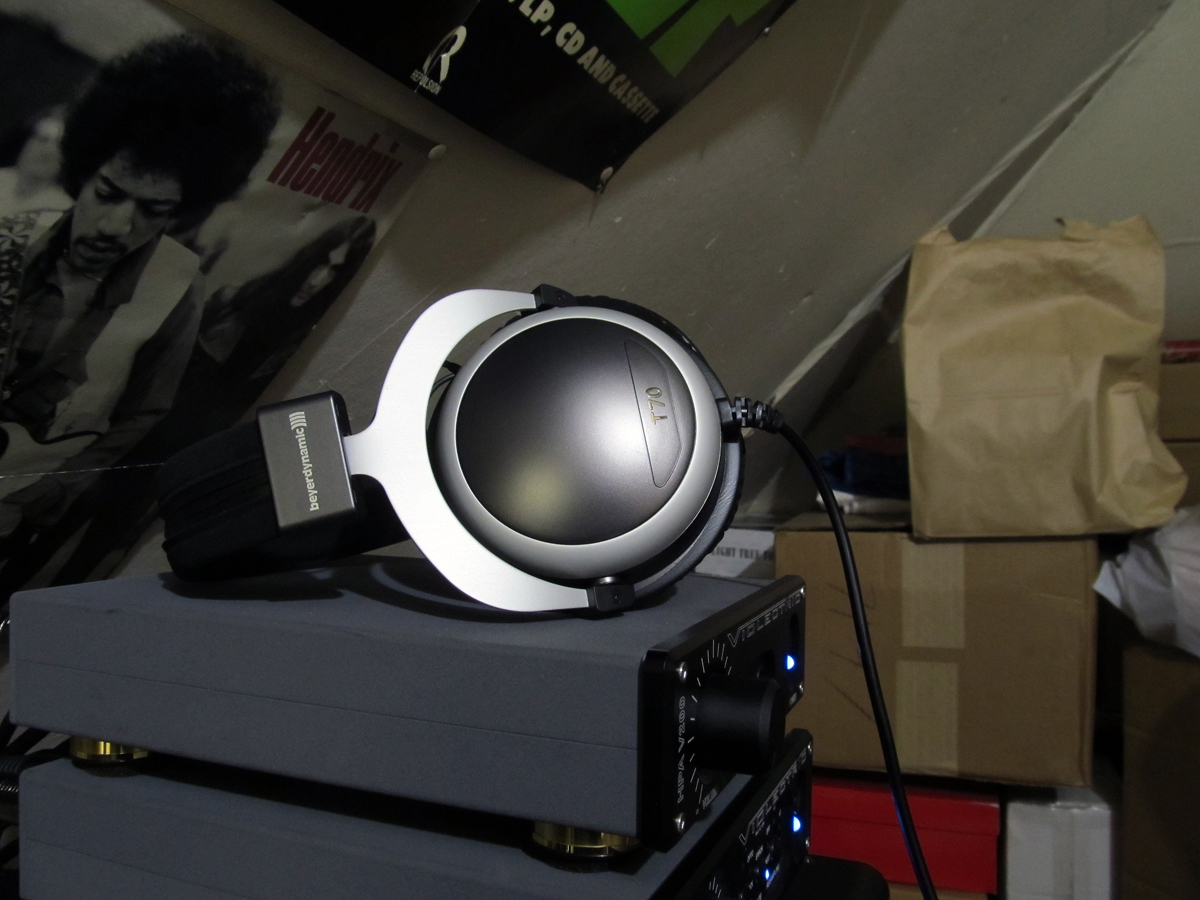
The T70/T70P are newly modified drivers now with the Tesla driver technology from beyerdynamic.
The sound very similar to the 600Ohm DT770, but much more refined and resolving. They seem to have a fuller sounding signature and tighter bass. The treble is smoother and more detailed. In comparison to the DT770/600Ohm they are warmer sounding, more detailed, resolving, and have faster dynamics. They are a great improvement over the DT770/600Ohm and worth the money in every way. The dynamics are much improved and the bass is much quicker souding
Since these now use the new Tesla tech from beyerdynamic they are now much easier to drive and have better dynamics. They get louder than either the DT770 250Ohm and 600Ohm much quicker and can get much louder than either of those as they have a higher power handling now. This also gives you more flexibility amp wise. From my SPL Auditor they are super loud right at 1/8 the way up the volume. With the 250Ohm DT770 the volume had the be a bit more than 1/4 of the max volume. The 600Ohm DT770 is loud at a bit more than 1/4 and between that and 1/2 of the total volume.
EDIT:
The T70p seems to have sharper/harsher treble than the T70 and also has a smaller soundstage. Everything else seems to be similar. Overal the T70 is smoother than it's portable brother.
Tesla T1
The Tesla T1 is beyerdynamic's flagship open headphone and clearly it's sound quality is there to show that off! (if that makes any sense
 ) I will be comparing the HD800 and T1 in this section as it's the only way I thought I could describe it for those who have heard this headphone.
Man oh man is this one awesome headphone. The way I could sum it up is a less analytical, and warmer version of the HD800. You heard me right! This headphone is very much like the HD800 in many ways, though the HD800 excels at imaging, bass texture/depth, and soundstage. But the T1 in my eye's (or ears) is much more natural sounding. Now it's less analytical sounding and offer's a smoother sound. The treble is not rolled off but softer you could say. That is it's not as pronounced as the HD800's treble (which I found to make somethings sound fake). The T1's treble is well extended and integrated into the sound. There is not one hint of harshness and these headphones have some of the best treble I have heard. The midrange is a wonder as well. The mids are on the warm side of neutral, but this aids in how natural music can sound. I found the mids to be even more transparent and resolving than the HD800. I listen to mostly metal and the HD800's mids were to sterile for that genre, while the T1's give the guitars the added body. Vocals sound so realistic on these headphones it gives me shivers. Now the bass, while not as deep or tight sounding as the HD800's is still one of the best out there. It extends deep and has more impact than the HD800. I found the impact on the HD800's really good, but I kind of wanted more "oomf" to the sound. The bass is very integrated as well and blends into the other frequencies very nicely. I think it has enough body and heft that it will please everyone. Now the soundstage on the T1 is very 3D and projects stuff out right in front of you. While the T1's soundstage is smaller than the HD800's I believe it's more speaker like.
DT250/80Ohm
The DT250 is an interesting headphone for sure. It has all of the qualities of the DT770 Pro 80Ohm, but maybe a tad more refined in some areas.
The treble on this headphone is super laid back, like a HD650, but is not veiled or syrupy. It's jsut so smooth and effortless. The extension is a bit lacking as they roll off early but the treble is detailed yet relaxed. The mids are ncie as well and aren't the typical thin and or recessed beyer mids. They are lively and just great! Much like a HD600's mids IMO, though not nearly as refined. Guitars and vocals have nice realism. The bass is similar to the DT770 Pro 80Ohm model in that is very forward and punchy. The bass does not extend that far nor is it all the detailed to me ears. It's more of a one tone bass. It does have awesome authority though. The soundstage is very dissapointing to me. It's very small and incredibly 2-dimensional. Seperation is ok but nothing great. Everything just blends together.
DT1350
The DT1350 is more or less the pro version of the T50p, but much improved.
The sound of this headphone, to me at least, is like that of a baby T1. It's warm and lush with an emphasis on both bass and treble. The treble itself is smooth with good extension. It's never harsh or sibilant. The midrange is forward and clean with excellent detail and resolving power. The mids on this headphone are probably the most forward next to the T1. The bass is really nice and extends ow but does seem to roll off on the lowest notes. It has a lot of impact to it because the midbass is more forward. It easily has more bass than on the T1, in terms of impact that is. The soundstage is average but still really good. It has good imaging but lacks some focus. As such the sound can blend together a little bit.
Custom One Pro - NEW
I'd say this headphone is like a customizable version of the famous DT770.
This headphone is of a similar tone to the DT770 Pro 80Ohm, but not quite as good. I mean it's not quite as capable as the DT770, but is quite close. Since this headphone has adjustable bass ports, you can fine tune your bass emphasis. The first setting is completely closed and lacks bass altogether, the second has more bass than the DT990, the third has similar bass levels to the 80Ohm DT770, the fourth setting is fully open and is completely bloated sounding. Of the settings, the second is the most controlled and has good impact with great extension. The sound of the headphones in general is quite similar to the DT770 with these being a bit warm in the mids and smooth in the treble. The soundstage is smaller than all DT770 variants though.
These are incredibly easy to drive and requite no amp at all. Any amp with a high damping factor will improve the bass though. Though that is to be expected with any bassy headphone.
________________________________________________________________________________________________
________________________________________________________________________________________________
MINI REVIEWS:
DT770 600Ohm
TREBLE:
The treble to my ears is about just as pronounced as the DT990, but not nearly as edgy sounding. It has good extension and good clarity though a bit below the higher models. To me the treble sounds more artificial or synthetic than the other models as well. It also should be noted that there is a slight sibilance to the sound.
MIDRANGE:
The midband is worse than that of the DT880 and DT990. It's probably the most withdrawn of the bunch and certainly does not help guitar work or vocals. Guitars can sound unusually thin/lifeless and vocals can sound somewhat further back in the mix. The midrange has good detail but from it being withdrawn so much you end up loosing some detail that could have been there.
BASS:
The bass is deep and tight on the DT770 though on the lean end. I would say, quantity wise, it's about half of what the DT880 offers and about less than a quarter of what the DT990 offers. Tough it's a bit lean the bass is still great and tight. The DT770 bass is different than the other two models as it's not textured like the DT880's and not as in your face as both the DT880 and DT990. It's more of a plain bass tone sound. If you are looking for powerful bass the 600Ohm model is not for you.
SOUNDSTAGE:
The soundstage is is the smallest of the group and as it's very confined and claustraphobic sounding. You don't have much depth, width or height. It sound very 2D and the sound only seems like it pans. Now to clarify the DT770 has a nice soundstage for a closed headphone but not as good as the other two.
DT880 600Ohm
TREBLE:
I find the treble on the DT880/600Ohm to be slightly smoother than the 250Ohm and 32Ohm models out there. It's very extended and crystalline in it's presentation. I find it to be harsh on poorly mastered or recorded material but when used with reference grade material the treble is to die for. Very articulate and grain free.
MIDRANGE:
Many say the DT880 is leaner in the midrange but I have to say they are not. The treble shines over the mids and makes them seem recessed or muted. The mids are very transparent with lots of detail and also have great resolving capabilities. Vocals sound very nice and realistic and guitars have an edge to them which is very nice.
BASS:
Yet again I hear this talk of the slow and muddy DT880 bass. The 250Ohm has this as well as the 32Ohm, but not the 600Ohm model. The bass is very punchy when needed and is very extended with great texturing and layering. It's is also not sluggish in anyway as long as the recordings bass is not that way. The bass is very tight and well controlled without being to dominant of the sound. Many on Head-Fi.org have said that the DT880 also has bloated bass which is simply not true.
SOUNDSTAGE:
The soundstage is very well layered and offers a lot of detail and separation of the various instruments. I find it to be quite accurate and spacious with good air. In comparison to the HD600 it is a bit bigger in terms of width and depth of the presentation. It's not the biggest out there but it is better than others.
DT990 600Ohm
TREBLE:
I find the treble on the DT990/600Ohm to be slightly smoother than the 250Ohm model. In comparison the 250Ohm models treble is quite prominent with more of an edge to it. It's very extended and crystalline in it's presentation while also being for in your face than the DT880. Because of the enhanced treble response, songs may have a harsher sounding treble with emphasis on the S and T sounds. It is still quite extended like the previous model.
MIDRANGE:
The DT990 has a more shallow sounding midrange in comparison to the DT880, but in fact the elevated treble/bass makes it sound thinner. It's still the great midrange that the DT880 had though it's a bit more detailed and perhaps a tiny bit more resolving. Because of the added treble it does indeed make the mids seem pulled back. In my eyes the DT880's sound more forward and more lifelike.
BASS:
The bass is almost like that of the DT880 but it looses it's texture and gains more impact and weight. The added impact is not great but it's enough to give a satisfying thump. I also found it's bass to extend deeper than that of the previous model and it's more controlled. The bass is a tiny tiny bit slower, but barely noticeable.
SOUNDSTAGE:
The soundstage is is wider than the DT880's and offers more layering and separation. It's still a very precise sounding soundstage that is still airy and open. It's a definite improvement in my opinion.
TESLA 1
TREBLE:
The treble on the T1 is really great for many reasons. It extends just as high as the HD800, but unlike that headphone it is not as in your face. To me the T1's treble is very smooth without a hint of stridence or harshness. It also sound more natural to me. The treble is also very airy, not as airy as the HD800's, but very close. I also found the treble to be very detailed.
MIDRANGE:
The T1 has the best midrange I have ever heard. It has exceptional resolving capabilities as well as being more transparent than the HD800 in my mind. I also found the midrange to be more fleshed out than the HD800's, and though the T1 has neutral mids they are very slightly warmer. This warmness makes music sound more natural and lifelike. To me the HD800's mids were really good, but a little thin and could be somewhat lifeless on certain recordings.
BASS:
The T1 definitely has more bass then the HD800 and this means more body and impact. I also found that the T1's lower most regions are a little rolled off, but not by that much. In fact I think the rolled off bass can make music sound more natural. The T1's bass still extends nearly as deep as the HD800's, but has more body and impact without sacrificing control or tightness. The bass of the T1 is more impactful than the DT770/DT880 but less than that of the DT990. The bass to me is perfect in it tonality and texturing capabilities which are really exceptional.
SOUNDSTAGE:
The soundstage is clearly much bigger than any of the DT770-DT990 variants and is also airy. I found it to be almost as big as the K702's soundstage, but has more depth and height to it. It's a really big stage that is nearly as big as the HD800's, but to me the HD800's is a little too big. The T1's is very spacious and provides great reproductions of spatial nuances and separation of instruments as well as providing a more accurate stereo image. Speaking of imaging, it's nothing short of incredible. You can place musicians on the stage really well and little nuances can be picked out really easily.
________________________________________________________________________________________________
________________________________________________________________________________________________
LINKS TO OTHER REVIEWS/COMPARSIONS:
________________________________________________________________________________________________
________________________________________________________________________________________________
OTHER MODELS:
REVOX 3100
The Revox 3100 is an OEM version of the DT880 600Ohms and sound nearly the same as the current models but has some noticeable differences.
Side by side you can tell they are a DT880 just from their sound signature but they do have differences. The first difference is that they have a smoother and slightly softer treble. This may be because of their age but I doubt it. Also the next difference is that they have more midrange body. It add a nice body to the sound. It's not as detailed/resolving of a midrange as the current 600Ohm model, but still good. Also the bass is different. The bass has less body and weight to it, but it's also tighter and more realistic, but lacks some of the layering of the current model. The soundstage on the 3100 is also very slightly smaller than the current model. It's still airy but not as wide sounding. Next is the speed of the headphone and I must say it's faster sounding than the current model. Decay is faster and transient speeds is quite obvious between the models. The newer model seems a touch slower in comparison.
So IMO the Revox 3100 is superior to the current DT880/600Ohm. It has more speed, better transients, smoother treble, tighter bass, and more midrange. Clearly I believe it's superior to the current line.
T50P
The T50P is a closed back portable headphone from beyerdynamic that sports their new tesla technology.
Well I usually don't expect much from portable headphones other than them usually being overpriced. I'm happy to say that the T50P is not over priced sounding at all! It has a rich and smooth sound with nice bass impact. Talking about the bass, it has nice impact and is very tight and controlled, easily the best bass I've heard out of any portable headphone. I would say the bass is similar to the DT880 600Ohm's bass, but less impact and body. Next about the treble, it's just absolutely grainless and offers great extension and is very detailed. The treble is also very airy. The midrange is something special my friends. It's a fleshed out midrange that is on the warm side of things. It's very transparent and resolving, especially for a portable headphone. I'd say it's as fleshed out as the T1's midrange, but not nearly as refined, but nonetheless it's something special. The soundstage is about the same as that of the DT770, meaning it's a little closed in sounding. I foudn that there weren't any odd resonances at all. This is great considering it's a closed headphone.
Oh and a word on the fitting for these. I find the best result when you rest them towards the back of your ears so the pads slightly overlap the back of your ears. This way you get a much fuller sound.
T70 / T70P
The T70/T70P are newly modified drivers now with the Tesla driver technology from beyerdynamic.
The sound very similar to the 600Ohm DT770, but much more refined and resolving. They seem to have a fuller sounding signature and tighter bass. The treble is smoother and more detailed. In comparison to the DT770/600Ohm they are warmer sounding, more detailed, resolving, and have faster dynamics. They are a great improvement over the DT770/600Ohm and worth the money in every way. The dynamics are much improved and the bass is much quicker souding
Since these now use the new Tesla tech from beyerdynamic they are now much easier to drive and have better dynamics. They get louder than either the DT770 250Ohm and 600Ohm much quicker and can get much louder than either of those as they have a higher power handling now. This also gives you more flexibility amp wise. From my SPL Auditor they are super loud right at 1/8 the way up the volume. With the 250Ohm DT770 the volume had the be a bit more than 1/4 of the max volume. The 600Ohm DT770 is loud at a bit more than 1/4 and between that and 1/2 of the total volume.
EDIT:
The T70p seems to have sharper/harsher treble than the T70 and also has a smaller soundstage. Everything else seems to be similar. Overal the T70 is smoother than it's portable brother.
Tesla T1
The Tesla T1 is beyerdynamic's flagship open headphone and clearly it's sound quality is there to show that off! (if that makes any sense
Man oh man is this one awesome headphone. The way I could sum it up is a less analytical, and warmer version of the HD800. You heard me right! This headphone is very much like the HD800 in many ways, though the HD800 excels at imaging, bass texture/depth, and soundstage. But the T1 in my eye's (or ears) is much more natural sounding. Now it's less analytical sounding and offer's a smoother sound. The treble is not rolled off but softer you could say. That is it's not as pronounced as the HD800's treble (which I found to make somethings sound fake). The T1's treble is well extended and integrated into the sound. There is not one hint of harshness and these headphones have some of the best treble I have heard. The midrange is a wonder as well. The mids are on the warm side of neutral, but this aids in how natural music can sound. I found the mids to be even more transparent and resolving than the HD800. I listen to mostly metal and the HD800's mids were to sterile for that genre, while the T1's give the guitars the added body. Vocals sound so realistic on these headphones it gives me shivers. Now the bass, while not as deep or tight sounding as the HD800's is still one of the best out there. It extends deep and has more impact than the HD800. I found the impact on the HD800's really good, but I kind of wanted more "oomf" to the sound. The bass is very integrated as well and blends into the other frequencies very nicely. I think it has enough body and heft that it will please everyone. Now the soundstage on the T1 is very 3D and projects stuff out right in front of you. While the T1's soundstage is smaller than the HD800's I believe it's more speaker like.
DT250/80Ohm
The DT250 is an interesting headphone for sure. It has all of the qualities of the DT770 Pro 80Ohm, but maybe a tad more refined in some areas.
The treble on this headphone is super laid back, like a HD650, but is not veiled or syrupy. It's jsut so smooth and effortless. The extension is a bit lacking as they roll off early but the treble is detailed yet relaxed. The mids are ncie as well and aren't the typical thin and or recessed beyer mids. They are lively and just great! Much like a HD600's mids IMO, though not nearly as refined. Guitars and vocals have nice realism. The bass is similar to the DT770 Pro 80Ohm model in that is very forward and punchy. The bass does not extend that far nor is it all the detailed to me ears. It's more of a one tone bass. It does have awesome authority though. The soundstage is very dissapointing to me. It's very small and incredibly 2-dimensional. Seperation is ok but nothing great. Everything just blends together.
DT1350
The DT1350 is more or less the pro version of the T50p, but much improved.
The sound of this headphone, to me at least, is like that of a baby T1. It's warm and lush with an emphasis on both bass and treble. The treble itself is smooth with good extension. It's never harsh or sibilant. The midrange is forward and clean with excellent detail and resolving power. The mids on this headphone are probably the most forward next to the T1. The bass is really nice and extends ow but does seem to roll off on the lowest notes. It has a lot of impact to it because the midbass is more forward. It easily has more bass than on the T1, in terms of impact that is. The soundstage is average but still really good. It has good imaging but lacks some focus. As such the sound can blend together a little bit.
Custom One Pro - NEW
I'd say this headphone is like a customizable version of the famous DT770.
This headphone is of a similar tone to the DT770 Pro 80Ohm, but not quite as good. I mean it's not quite as capable as the DT770, but is quite close. Since this headphone has adjustable bass ports, you can fine tune your bass emphasis. The first setting is completely closed and lacks bass altogether, the second has more bass than the DT990, the third has similar bass levels to the 80Ohm DT770, the fourth setting is fully open and is completely bloated sounding. Of the settings, the second is the most controlled and has good impact with great extension. The sound of the headphones in general is quite similar to the DT770 with these being a bit warm in the mids and smooth in the treble. The soundstage is smaller than all DT770 variants though.
These are incredibly easy to drive and requite no amp at all. Any amp with a high damping factor will improve the bass though. Though that is to be expected with any bassy headphone.
________________________________________________________________________________________________
________________________________________________________________________________________________
MINI REVIEWS:
DT770 600Ohm
TREBLE:
The treble to my ears is about just as pronounced as the DT990, but not nearly as edgy sounding. It has good extension and good clarity though a bit below the higher models. To me the treble sounds more artificial or synthetic than the other models as well. It also should be noted that there is a slight sibilance to the sound.
MIDRANGE:
The midband is worse than that of the DT880 and DT990. It's probably the most withdrawn of the bunch and certainly does not help guitar work or vocals. Guitars can sound unusually thin/lifeless and vocals can sound somewhat further back in the mix. The midrange has good detail but from it being withdrawn so much you end up loosing some detail that could have been there.
BASS:
The bass is deep and tight on the DT770 though on the lean end. I would say, quantity wise, it's about half of what the DT880 offers and about less than a quarter of what the DT990 offers. Tough it's a bit lean the bass is still great and tight. The DT770 bass is different than the other two models as it's not textured like the DT880's and not as in your face as both the DT880 and DT990. It's more of a plain bass tone sound. If you are looking for powerful bass the 600Ohm model is not for you.
SOUNDSTAGE:
The soundstage is is the smallest of the group and as it's very confined and claustraphobic sounding. You don't have much depth, width or height. It sound very 2D and the sound only seems like it pans. Now to clarify the DT770 has a nice soundstage for a closed headphone but not as good as the other two.
DT880 600Ohm
TREBLE:
I find the treble on the DT880/600Ohm to be slightly smoother than the 250Ohm and 32Ohm models out there. It's very extended and crystalline in it's presentation. I find it to be harsh on poorly mastered or recorded material but when used with reference grade material the treble is to die for. Very articulate and grain free.
MIDRANGE:
Many say the DT880 is leaner in the midrange but I have to say they are not. The treble shines over the mids and makes them seem recessed or muted. The mids are very transparent with lots of detail and also have great resolving capabilities. Vocals sound very nice and realistic and guitars have an edge to them which is very nice.
BASS:
Yet again I hear this talk of the slow and muddy DT880 bass. The 250Ohm has this as well as the 32Ohm, but not the 600Ohm model. The bass is very punchy when needed and is very extended with great texturing and layering. It's is also not sluggish in anyway as long as the recordings bass is not that way. The bass is very tight and well controlled without being to dominant of the sound. Many on Head-Fi.org have said that the DT880 also has bloated bass which is simply not true.
SOUNDSTAGE:
The soundstage is very well layered and offers a lot of detail and separation of the various instruments. I find it to be quite accurate and spacious with good air. In comparison to the HD600 it is a bit bigger in terms of width and depth of the presentation. It's not the biggest out there but it is better than others.
DT990 600Ohm
TREBLE:
I find the treble on the DT990/600Ohm to be slightly smoother than the 250Ohm model. In comparison the 250Ohm models treble is quite prominent with more of an edge to it. It's very extended and crystalline in it's presentation while also being for in your face than the DT880. Because of the enhanced treble response, songs may have a harsher sounding treble with emphasis on the S and T sounds. It is still quite extended like the previous model.
MIDRANGE:
The DT990 has a more shallow sounding midrange in comparison to the DT880, but in fact the elevated treble/bass makes it sound thinner. It's still the great midrange that the DT880 had though it's a bit more detailed and perhaps a tiny bit more resolving. Because of the added treble it does indeed make the mids seem pulled back. In my eyes the DT880's sound more forward and more lifelike.
BASS:
The bass is almost like that of the DT880 but it looses it's texture and gains more impact and weight. The added impact is not great but it's enough to give a satisfying thump. I also found it's bass to extend deeper than that of the previous model and it's more controlled. The bass is a tiny tiny bit slower, but barely noticeable.
SOUNDSTAGE:
The soundstage is is wider than the DT880's and offers more layering and separation. It's still a very precise sounding soundstage that is still airy and open. It's a definite improvement in my opinion.
TESLA 1
TREBLE:
The treble on the T1 is really great for many reasons. It extends just as high as the HD800, but unlike that headphone it is not as in your face. To me the T1's treble is very smooth without a hint of stridence or harshness. It also sound more natural to me. The treble is also very airy, not as airy as the HD800's, but very close. I also found the treble to be very detailed.
MIDRANGE:
The T1 has the best midrange I have ever heard. It has exceptional resolving capabilities as well as being more transparent than the HD800 in my mind. I also found the midrange to be more fleshed out than the HD800's, and though the T1 has neutral mids they are very slightly warmer. This warmness makes music sound more natural and lifelike. To me the HD800's mids were really good, but a little thin and could be somewhat lifeless on certain recordings.
BASS:
The T1 definitely has more bass then the HD800 and this means more body and impact. I also found that the T1's lower most regions are a little rolled off, but not by that much. In fact I think the rolled off bass can make music sound more natural. The T1's bass still extends nearly as deep as the HD800's, but has more body and impact without sacrificing control or tightness. The bass of the T1 is more impactful than the DT770/DT880 but less than that of the DT990. The bass to me is perfect in it tonality and texturing capabilities which are really exceptional.
SOUNDSTAGE:
The soundstage is clearly much bigger than any of the DT770-DT990 variants and is also airy. I found it to be almost as big as the K702's soundstage, but has more depth and height to it. It's a really big stage that is nearly as big as the HD800's, but to me the HD800's is a little too big. The T1's is very spacious and provides great reproductions of spatial nuances and separation of instruments as well as providing a more accurate stereo image. Speaking of imaging, it's nothing short of incredible. You can place musicians on the stage really well and little nuances can be picked out really easily.
________________________________________________________________________________________________
________________________________________________________________________________________________
LINKS TO OTHER REVIEWS/COMPARSIONS:
Zombie_X
Headphoneus Supremus
PART 2 - DT SERIES MODELS HEAD-2-HEAD
Here is will compare the models head to head. Currently I only have the 600Ohm versions on hand so 32Ohm and 250Ohm models will not be included.
___________________________________________________________________________
___________________________________________________________________________
DT770 VS DT880
The DT770 and DT880 sound very similar at first, but you will notice difference after more time with them.
The most noticeable difference is how the DT880 has more treble than the DT770. Both have a smoother sounding treble (to my ears), but beyerdynamic headphones in this line have a treble emphasis. The DT990's treble is extended and details, but lacks the sparkle that the DT880 posses. The DT880's treble has a good bit of extra detail to it as well as the sparkle I mentioned above. Not only that but it's also a more resolving treble.
The midrange on both is great with good transparency and details. The DT880 seems to have aslightly "thinner" much fuller sounding midrange than the DT770. I believe the DT770's DT880's sounds thicker there is because it has a softer treble than the DT880's DT770's. Now the DT880 will have slightly more detail in this region, but the DT770 is close. Even though the DT770 has more less midrange than the DT880, the mids on the DT7700in comparison to other cans like the K240 Monitor, are recessed.
EDITED
Bass on both is really tight and defined without being boomy of flabby. The DT880 has more impact to it and also extends deeper as well also having more texture to it. The DT770's is still great no doubt, but does not have the layering, texturing, and extension that the DT880 provides.
Soundstage differences between the two is very obvious. The DT770 while having a big soundstage for a closed phone, sounds a little bit confined and congested (due to it being a closed headphone). Just because it's confined sounding does not mean it's bad. It still has nice air to it, just not like the DT880. Now the DT880 is pretty spacious sounding and has lots of air to it's soundstage. The imaging on both is great and I think they are very close.
DT880 VS DT990
The DT880 and DT990 have a very similar sound, but the DT990 is noticeably brighter and has much more bass to it.
The DT990's treble is much more pronounced than the DT880 and can be called strident by those who are not used to so much treble energy. I find the DT880 and DT990 to have nearly the same detail in the treble, though the DT990is slightly more detailed. Also th DT990's treble does not sound as refined as the previous two models.
The midrange on the DT990 has a dip to it, this means it has less mids than the DT880. I think a lot of the mids get drowned out by the treble/bass to be honest. From what mids are there, they sound very nice and are quite resolving, even though they are thin. The DT880's mids have more body to them and can portray string instruments and vocals better. On the DT990 the guitars can sound thin and the vocal sound unconvincing. The DT880's mids have almost as much detail as the DT990 while retaining more body with equal amounts of transparency.
Bass on both models is excellent. They both go quite low and extend do depths that human ears cannot hear. The DT990 has far more bass than it's counterpart while keeping it tight and controlled. The one thing I noticed is that the DT990's bass does not have the same texturing to it as the DT880. The DT880's bass is more natural sounding with more definition to it while the DT990's is a fuller sounding bass with more thump.
The soundstage on the DT990 is bigger than the DT880's and has more air to it, though the imaging seems to be nearly identical. The DT880's soundstage has a "in your head" sound while the DT990's seems to go beyond your ears and around your head.
DT770 VS DT990
They have a similar sound but the DT770 is a much more balanced sounding headphone, though not as refined sounding as the others (especially the DT880).
The DT770's treble versus the DT990 is much softer with less detail and air, but sounds more natural. The DT990's is a lot more pronounced and is also more detailed and airy, but not as pleasant sounding as the DT770's. Though they extend very nicely, the DT770's comes a little short in this area.
The midrange of both are noticeably different sounding. The DT770's midrange is muchfuller thinner and less resolving and detailed than the DT990's. The DT990's, as stated earlier, is dryer sounding. When listening to both headphones it's apparent that the DT990's is thin. The DT770's give a more lifelike presentation and sound more natural. The DT990's can make a lot of music sound thin but the DT770's makes music sound lifeless.
EDITED
The bass on both is still great with nice control and definition. The DT770's bass is more reserved sounding and can make some music sound as if it's not weighty, or lacks body. It's very much like the DT880's bass, but like you turned the volume down on it. The DT990's bass is far more upfront than both models and adds some life to bass light recordings. By the bass being boosted, you lose some detail and texturing in the bass. It's most noticeable on some electronic music with complex bass passages. The DT990 can sometimes smear the bass if it can't handle the passage. I found the DT770 to be more nimble in the bass and can keep up pretty good.
The soundstage on the DT990 is far more open and is an "out f the head" experience, while the DT770's is confined and very much a "in the head" experience. They both have nice soundstaging abilities and are the results of their designs. The DT990 being fully open will naturally have a wider soundstage, and the DT770 being a closed headphone will have a smaller one (though this is not always the case!).
_________________________________________________________________________________________________
_________________________________________________________________________________________________
TESLA T1 VS. :
Here I will compare the Tesla T1 to all three DT models.
Tesla T1 VS DT770
The T1 and DT770 sound very different. The T1 having the best bass, midrange,treble, and soundstage. The Treble of both are very good. The DT770's treble in comparison is slightly more prominent than the T1's, though does not integrate as good not have the air the T1 has. The treble of both is very detailed, while the T1's can be more forgiving, while the DT770's shows what's there. The DT770's treble is more analytical sounding. The midrange on both is excellent.
I'd say they were close in terms of midrange body. The midrange body between the two are fuller than other DT models . The T1 obviously has far more midrange and easily beats the DT770 in terms of body, transparency, and resolving capabilities. The DT770's midrange is more neutral and faithful shallow and recessed. The DT770 sounds fuller than the DT880 and DT990. The DT770's mids are the most shallow of the DT lien up and nowhere near as full sounding as the T1.
EDITED
The bass on both is really good. I find them both to extend very low, but I may have to put a anti-flame suit for saying it sounds like the DT770's bass extends deeper. Yeah to me the T1's bass has a slight roll off on the deepest notes, while the DT770 does not. In terms of bass quality the T1 easily wins. It's bass is more controlled with more impact and great layering.
The last bit to compare is the soundstage. I find them both to have exceptional layering, but the DT770 has a very 2D sounding soundstage in comparison.
Tesla T1 VS DT880
The T1 and DT880 sound very similar. The DT880 is brighter, more neutral, and sounds more analytical. The T1 as stated in part one is a smoother sounding headphone and though it's neutral, it's on the warm side of neutral. The treble on the DT880 is very detailed and airy, easily my favorite treble in a open headphone in the mid-fi category. The DT880's treble is very neutral and a tad dry sounding in comparison to the T1's softer treble. Though the T1's treble is softer sounding, it still is more resolving and airy than the DT880's and is far more detailed.
The midrange on both is very good. The DT880's is midrange full and very transparent, even more transparent than the DT770's. The T1's midrange is warmeras a little bit less and more accurate sounding than the previous models. It offers the most transparency, detail, and resolving power of all the headphones compared. Personally I love both flavors but prefer the T1's midrange as it add some body to some poorly mastered material and is just so nice and full. Really adds so much tot he music.
The bass on both is incredibly similar. I find the bass on the T1 to have nearly the same tone as the DT880's (texturing, layering, impact), but the T1 does all of those aspects much better. It's still surprising that they sound similar. I should add that the T1 has a lot more impact and body than the DT880.
The soundstage on the T1 is surely wider and offers more depth and accuracy, but the DT880 is not that far behind. Sure the DT880's is much smaller sounding but the layering and imaging in the soundstage is still exceptional for a headphone in this price range.
I'd say the T1 is a DT880 on steroids and also sound much warmer.
Tesla T1 VS DT990
IMO the DT990 has the airiest treble out of top three in the DT line. It also is more prominent. I found the treble to make somethings sound artificial and add a slight metallic sound on poorly mastered recordings. Now on stuff that's mastered good the treble is great. I find it to be smooth (I may be alone on this) and incredibly detailed. Is it more detailed than the T1's treble? No it's not but can sound like it. The T1's treble is much softer sounding (can sound rolled off in comparison), but still excels at everything. I probably sound like a broken record now
 .
.
The midrange on the DT990, as stated before, is slightly hollow sounding and can make guitars sound thinner. I believe this is from the treble boost, but also it could be seen as more accurate. The midrange of the DT990, in my mind, is the most detailed and resolving of the DT line though, but still can not compare tot he T1's. They are very different flavors of that sound spectrum.
The bass on the DT990 has more impact and body to it than the T1's, but does not sound as integrated. It can sometimes have a life of it's own and run wild. It extend really deep and I'll be bold by saying slightly more than the T1. Yet again the T1's bass has better control and is tighter with more texturing. The DT990's bass losses a lot of it's texturing because of the added bass quantity.
The soundstage on both is great and the DT990 has a much bigger soundstage than the DT880, but not nearly as wide or deep as the T1. It does have similar characteristics though such as separation and width. But that's about it IMO.
________________________________________________________________
________________________________________________________________
HD600 VS. :
Here I will compare the HD600 to all three DT models. This section may sound likeI'm downing the HD600, but I am not. I'm just giving my honest impressions of these headphones.
HD600 VS DT770
The HD600 and DT770 sound very different from each other. The DT770 is a closed headphone with a smaller soundstage and emphasis on treble while the HD600 is an open headphone with emphasis on mids and bass. The HD600 has a very soft treble and what I mean is that it sounds very rolled off and lacks some detail. The DT770's treble is far more prominent and sounds more involving and more detailed. The HD600's treble is so smooth that you loose a lot of those micro details while the DT770's treble picks them up.
The midrange on the HD600 is much fuller than the DT770, but seems to lack some resolving capabilities. The DT770's is a lot thinner sounding and it's alsomore less accurate and more less resolving. The HD600's mids give guitars more body and also give vocals more presence while the DT770's don't add anything to the sound, they just present it as it is.
EDITED - Bad wording on my part at the time.
The bass on the HD600 is far fuller sounding with a lot more impact, but not as clear and or tight sounding as the DT770's. IMO the HD600 has good texture to the bass, but can some times sound like a one tone thump. The DT770's bass hasmore less texture and detail to it and extends deeper, but has a lot less impact than the HD600.
EDITED - Yet again bad wording on my end.
For soundstage for both is very different. The HD600 has a decently sized soundstage, but it's bigger than the DT770's in my opinion. The HD600 has better separation it seems, but the DT770's has better air to it.
Believe it or not, I prefer the HD600 to the DT770, but I use the DT770 because it's a closed headphone.
HD600 VS DT880
The HD600 and DT880 sound very different. The Sennheiser headphone having a more relaxed and warmer sound while the Beyerdynamic phone to have a more lively, involving sound. The treble is very different between them. Just liek with the DT770, the HD600's treble kind of sounds very muted or toned down and lacks detail and extension while the DT880 has lots of detail and extends way up there. The DT880's treble is also far cleaner sounding and hazy sounding like the HD600's, but the HD600's treble is still nice in my opinion. The treble on the HD600 can tame normally brightly mastered music as well.
The midrange on both is as stated before with the DT770, but the DT880 has far more detail to it's midrange than the DT770 has but also is a lot more resolving and detailed than the HD600's. The HD600's midrange can sound a bit hazy and congested on some pieces, and can also add some unneeded warmth to already warm recordings. It can also add more warmth to recordings that lack some midrange body. It's also good for covering up recording errors.
Bass on both is still very different. The HD600 still has a one tone sound to it compared to the complex bass of the DT880. The DT880's bass has a lot of texture to it and can easily trump the HD600's bass. The DT880's also extends even deeper than the DT770. The HD600 has decent extension to it but lacks some texturing. One thing to note is that the HD600 does have more body and impact to it's bass than the DT880 does, but the DT880's bass sounds more realistic and natural.
The soundstage on both is very comparable in terms of width and depth, but the DT880 sounds bigger. Layering on both is good and the DT880 has the edge on separation and air this time. The DT880's has one of the best stages in the mid-fi category I believe, and is more accurate as far as where sounds would be originating from.
HD600 VS DT990
The DT990 is the polar opposite of the HD600 with it's shallower mids, prominent highs, and thumping bass.
The treble on the DT990 would be a shock if you were coming from a HD600. The treble could be overwhelming if you are not used to more treble, but the treble is smoother than you would think. Hell it's like the MDR-V6's hard treble. The DT990's treble is far more refined sounding than the HD600. It offers far more detail than the HD600's and also has a lot more air to it. Extension on the DT990's treble is far more than the HD600's and really goes up there.
The HD600 was a very smooth and liquid like treble that is very pleasant to listen to. It's not as detailed sounding as the DT990 but still has a great deal of detail. Also I believe the HD600 treble is more lifelike than that of the DT990
The mids on both a very different. While the DT990's midsare sound more resolving and detailed than the HD600's, they are also however a lot thinner sounding. When it comes to these two, I believe the HD600's mids have a more lifelike tone to them, but as stated before they lose some accuracy because they are smoother and more forgiving. The DT990's mids can make vocals sound thin and also make guitars sound that way as well. Not very lifelike at all.
The HD600 midrange is very lush sounding and definitely on the warm side of things. It can be said that it's more natural and lifelike to the DT990's, but I still feel the DT990's mids are more detailed and resolved.
The bass to these sound similar in terms of impact and body. In fact the DT990 has more impact and extends deeper while remaining tight and in control. The HD600's bass can sound a bit flabby if you've listened to both. The DT990's bass does loose some texture from the added bass, but not much. It's still better than the HD600's bass from what I hear. The DT990's bass is also faster sounding. The HD600's bass can sound very slow if not amped right,b ut when amped right it gets tighter and becomes faster, but still can not beat the DT990's bass.
The soundstage on these two is also different as the DT990 has the largest soundstage out of the DT line. It's more 3d sounding than the DT880 and HD600 and is pretty airy and has better separation. The HD600's sounds more "in your head" and not as wide. The DT990 beats out the HD600 in every department.
Here is will compare the models head to head. Currently I only have the 600Ohm versions on hand so 32Ohm and 250Ohm models will not be included.
DT770 VS DT880
The DT770 and DT880 sound very similar at first, but you will notice difference after more time with them.
The most noticeable difference is how the DT880 has more treble than the DT770. Both have a smoother sounding treble (to my ears), but beyerdynamic headphones in this line have a treble emphasis. The DT990's treble is extended and details, but lacks the sparkle that the DT880 posses. The DT880's treble has a good bit of extra detail to it as well as the sparkle I mentioned above. Not only that but it's also a more resolving treble.
The midrange on both is great with good transparency and details. The DT880 seems to have a
EDITED
Bass on both is really tight and defined without being boomy of flabby. The DT880 has more impact to it and also extends deeper as well also having more texture to it. The DT770's is still great no doubt, but does not have the layering, texturing, and extension that the DT880 provides.
Soundstage differences between the two is very obvious. The DT770 while having a big soundstage for a closed phone, sounds a little bit confined and congested (due to it being a closed headphone). Just because it's confined sounding does not mean it's bad. It still has nice air to it, just not like the DT880. Now the DT880 is pretty spacious sounding and has lots of air to it's soundstage. The imaging on both is great and I think they are very close.
DT880 VS DT990
The DT880 and DT990 have a very similar sound, but the DT990 is noticeably brighter and has much more bass to it.
The DT990's treble is much more pronounced than the DT880 and can be called strident by those who are not used to so much treble energy. I find the DT880 and DT990 to have nearly the same detail in the treble, though the DT990is slightly more detailed. Also th DT990's treble does not sound as refined as the previous two models.
The midrange on the DT990 has a dip to it, this means it has less mids than the DT880. I think a lot of the mids get drowned out by the treble/bass to be honest. From what mids are there, they sound very nice and are quite resolving, even though they are thin. The DT880's mids have more body to them and can portray string instruments and vocals better. On the DT990 the guitars can sound thin and the vocal sound unconvincing. The DT880's mids have almost as much detail as the DT990 while retaining more body with equal amounts of transparency.
Bass on both models is excellent. They both go quite low and extend do depths that human ears cannot hear. The DT990 has far more bass than it's counterpart while keeping it tight and controlled. The one thing I noticed is that the DT990's bass does not have the same texturing to it as the DT880. The DT880's bass is more natural sounding with more definition to it while the DT990's is a fuller sounding bass with more thump.
The soundstage on the DT990 is bigger than the DT880's and has more air to it, though the imaging seems to be nearly identical. The DT880's soundstage has a "in your head" sound while the DT990's seems to go beyond your ears and around your head.
DT770 VS DT990
They have a similar sound but the DT770 is a much more balanced sounding headphone, though not as refined sounding as the others (especially the DT880).
The DT770's treble versus the DT990 is much softer with less detail and air, but sounds more natural. The DT990's is a lot more pronounced and is also more detailed and airy, but not as pleasant sounding as the DT770's. Though they extend very nicely, the DT770's comes a little short in this area.
The midrange of both are noticeably different sounding. The DT770's midrange is much
EDITED
The bass on both is still great with nice control and definition. The DT770's bass is more reserved sounding and can make some music sound as if it's not weighty, or lacks body. It's very much like the DT880's bass, but like you turned the volume down on it. The DT990's bass is far more upfront than both models and adds some life to bass light recordings. By the bass being boosted, you lose some detail and texturing in the bass. It's most noticeable on some electronic music with complex bass passages. The DT990 can sometimes smear the bass if it can't handle the passage. I found the DT770 to be more nimble in the bass and can keep up pretty good.
The soundstage on the DT990 is far more open and is an "out f the head" experience, while the DT770's is confined and very much a "in the head" experience. They both have nice soundstaging abilities and are the results of their designs. The DT990 being fully open will naturally have a wider soundstage, and the DT770 being a closed headphone will have a smaller one (though this is not always the case!).
TESLA T1 VS. :
Here I will compare the Tesla T1 to all three DT models.
Tesla T1 VS DT770
The T1 and DT770 sound very different. The T1 having the best bass, midrange,treble, and soundstage. The Treble of both are very good. The DT770's treble in comparison is slightly more prominent than the T1's, though does not integrate as good not have the air the T1 has. The treble of both is very detailed, while the T1's can be more forgiving, while the DT770's shows what's there. The DT770's treble is more analytical sounding. The midrange on both is excellent.
EDITED
The bass on both is really good. I find them both to extend very low, but I may have to put a anti-flame suit for saying it sounds like the DT770's bass extends deeper. Yeah to me the T1's bass has a slight roll off on the deepest notes, while the DT770 does not. In terms of bass quality the T1 easily wins. It's bass is more controlled with more impact and great layering.
The last bit to compare is the soundstage. I find them both to have exceptional layering, but the DT770 has a very 2D sounding soundstage in comparison.
Tesla T1 VS DT880
The T1 and DT880 sound very similar. The DT880 is brighter, more neutral, and sounds more analytical. The T1 as stated in part one is a smoother sounding headphone and though it's neutral, it's on the warm side of neutral. The treble on the DT880 is very detailed and airy, easily my favorite treble in a open headphone in the mid-fi category. The DT880's treble is very neutral and a tad dry sounding in comparison to the T1's softer treble. Though the T1's treble is softer sounding, it still is more resolving and airy than the DT880's and is far more detailed.
The midrange on both is very good. The DT880's is midrange full and very transparent, even more transparent than the DT770's. The T1's midrange is warmer
The bass on both is incredibly similar. I find the bass on the T1 to have nearly the same tone as the DT880's (texturing, layering, impact), but the T1 does all of those aspects much better. It's still surprising that they sound similar. I should add that the T1 has a lot more impact and body than the DT880.
The soundstage on the T1 is surely wider and offers more depth and accuracy, but the DT880 is not that far behind. Sure the DT880's is much smaller sounding but the layering and imaging in the soundstage is still exceptional for a headphone in this price range.
I'd say the T1 is a DT880 on steroids and also sound much warmer.
Tesla T1 VS DT990
IMO the DT990 has the airiest treble out of top three in the DT line. It also is more prominent. I found the treble to make somethings sound artificial and add a slight metallic sound on poorly mastered recordings. Now on stuff that's mastered good the treble is great. I find it to be smooth (I may be alone on this) and incredibly detailed. Is it more detailed than the T1's treble? No it's not but can sound like it. The T1's treble is much softer sounding (can sound rolled off in comparison), but still excels at everything. I probably sound like a broken record now
The midrange on the DT990, as stated before, is slightly hollow sounding and can make guitars sound thinner. I believe this is from the treble boost, but also it could be seen as more accurate. The midrange of the DT990, in my mind, is the most detailed and resolving of the DT line though, but still can not compare tot he T1's. They are very different flavors of that sound spectrum.
The bass on the DT990 has more impact and body to it than the T1's, but does not sound as integrated. It can sometimes have a life of it's own and run wild. It extend really deep and I'll be bold by saying slightly more than the T1. Yet again the T1's bass has better control and is tighter with more texturing. The DT990's bass losses a lot of it's texturing because of the added bass quantity.
The soundstage on both is great and the DT990 has a much bigger soundstage than the DT880, but not nearly as wide or deep as the T1. It does have similar characteristics though such as separation and width. But that's about it IMO.
HD600 VS. :
Here I will compare the HD600 to all three DT models. This section may sound likeI'm downing the HD600, but I am not. I'm just giving my honest impressions of these headphones.
HD600 VS DT770
The HD600 and DT770 sound very different from each other. The DT770 is a closed headphone with a smaller soundstage and emphasis on treble while the HD600 is an open headphone with emphasis on mids and bass. The HD600 has a very soft treble and what I mean is that it sounds very rolled off and lacks some detail. The DT770's treble is far more prominent and sounds more involving and more detailed. The HD600's treble is so smooth that you loose a lot of those micro details while the DT770's treble picks them up.
The midrange on the HD600 is much fuller than the DT770, but seems to lack some resolving capabilities. The DT770's is a lot thinner sounding and it's also
EDITED - Bad wording on my part at the time.
The bass on the HD600 is far fuller sounding with a lot more impact, but not as clear and or tight sounding as the DT770's. IMO the HD600 has good texture to the bass, but can some times sound like a one tone thump. The DT770's bass has
EDITED - Yet again bad wording on my end.
For soundstage for both is very different. The HD600 has a decently sized soundstage, but it's bigger than the DT770's in my opinion. The HD600 has better separation it seems, but the DT770's has better air to it.
Believe it or not, I prefer the HD600 to the DT770, but I use the DT770 because it's a closed headphone.
HD600 VS DT880
The HD600 and DT880 sound very different. The Sennheiser headphone having a more relaxed and warmer sound while the Beyerdynamic phone to have a more lively, involving sound. The treble is very different between them. Just liek with the DT770, the HD600's treble kind of sounds very muted or toned down and lacks detail and extension while the DT880 has lots of detail and extends way up there. The DT880's treble is also far cleaner sounding and hazy sounding like the HD600's, but the HD600's treble is still nice in my opinion. The treble on the HD600 can tame normally brightly mastered music as well.
The midrange on both is as stated before with the DT770, but the DT880 has far more detail to it's midrange than the DT770 has but also is a lot more resolving and detailed than the HD600's. The HD600's midrange can sound a bit hazy and congested on some pieces, and can also add some unneeded warmth to already warm recordings. It can also add more warmth to recordings that lack some midrange body. It's also good for covering up recording errors.
Bass on both is still very different. The HD600 still has a one tone sound to it compared to the complex bass of the DT880. The DT880's bass has a lot of texture to it and can easily trump the HD600's bass. The DT880's also extends even deeper than the DT770. The HD600 has decent extension to it but lacks some texturing. One thing to note is that the HD600 does have more body and impact to it's bass than the DT880 does, but the DT880's bass sounds more realistic and natural.
The soundstage on both is very comparable in terms of width and depth, but the DT880 sounds bigger. Layering on both is good and the DT880 has the edge on separation and air this time. The DT880's has one of the best stages in the mid-fi category I believe, and is more accurate as far as where sounds would be originating from.
HD600 VS DT990
The DT990 is the polar opposite of the HD600 with it's shallower mids, prominent highs, and thumping bass.
The treble on the DT990 would be a shock if you were coming from a HD600. The treble could be overwhelming if you are not used to more treble, but the treble is smoother than you would think. Hell it's like the MDR-V6's hard treble. The DT990's treble is far more refined sounding than the HD600. It offers far more detail than the HD600's and also has a lot more air to it. Extension on the DT990's treble is far more than the HD600's and really goes up there.
The HD600 was a very smooth and liquid like treble that is very pleasant to listen to. It's not as detailed sounding as the DT990 but still has a great deal of detail. Also I believe the HD600 treble is more lifelike than that of the DT990
The mids on both a very different. While the DT990's mids
The HD600 midrange is very lush sounding and definitely on the warm side of things. It can be said that it's more natural and lifelike to the DT990's, but I still feel the DT990's mids are more detailed and resolved.
The bass to these sound similar in terms of impact and body. In fact the DT990 has more impact and extends deeper while remaining tight and in control. The HD600's bass can sound a bit flabby if you've listened to both. The DT990's bass does loose some texture from the added bass, but not much. It's still better than the HD600's bass from what I hear. The DT990's bass is also faster sounding. The HD600's bass can sound very slow if not amped right,b ut when amped right it gets tighter and becomes faster, but still can not beat the DT990's bass.
The soundstage on these two is also different as the DT990 has the largest soundstage out of the DT line. It's more 3d sounding than the DT880 and HD600 and is pretty airy and has better separation. The HD600's sounds more "in your head" and not as wide. The DT990 beats out the HD600 in every department.
Zombie_X
Headphoneus Supremus
PART 3 - AMPING THE HEADPHONES
UPDATED ON 12/17/2011
This section will be just about amping the headphones properly. I will give specifics on what you should use to power them and what not to use.
___________________________________________________________________________
___________________________________________________________________________
[size=18pt]32Ohm Models[/size]
UPDATED ON 12/17/2011
This section will be just about amping the headphones properly. I will give specifics on what you should use to power them and what not to use.
___________________________________________________________________________
___________________________________________________________________________
[size=18pt]32Ohm Models[/size]
Despite their low Ohm rating, the 32Ohm variants actually will need a little more power than what the 250Ohm require. The reason they need a bit more juice is because of their sensitivity and impedance. They have both a really low impedance and a lower sensitivity rating, thus they will need more power. Take the K701/K702 for example: despite it's low impedance (62Ohms I beleive), they have a very low sensitivity. The more sensitive a headphone is the easier they will be to power and reach a desired volume. The DT770/32 have a impedance of 32Ohms and a sensitivity rating of 101dB. This makes than a bit more difficult tog et to the desired volume and power properly. I believe they require a nice voltage swing as well as more current than most 32Ohm headphones.
For the 32Ohm versions I can suggest a nice solid state amp that is very high current with a decent voltage swing. I have tried the 32Ohm models on my X-CANV8P and must say this amp can drive them very nicely. It has more than enough current and voltage to drive them to insane volumes and not have them clip. When properly amped the 32Ohm models should have a more refined treble and bass with a bit more resolution. I find that they become softer or smoother sounding. They can sound thiner with a slight edge in the upper registers.

I could recommend the Audio-GD C2 and ROC models for this headphone as well as the X-CANV8P. Really any powerful high current solid state headphones should be able to drive the perfectly fine.
EDIT (12/17/2011):
Little-Dot 1+ Hybrid Amp:
Sep 20, 2010 at 10:21 AM
Post #4 of 1,845

Sep 20, 2010 at 5:44 PM
Post #5 of 1,845
Sep 20, 2010 at 7:08 PM
Post #6 of 1,845
Quote:
Okay,if you insist .

Sep 20, 2010 at 7:16 PM
Post #7 of 1,845
Sep 20, 2010 at 7:25 PM
Post #8 of 1,845
Sep 20, 2010 at 8:41 PM
Post #9 of 1,845

Sep 20, 2010 at 8:57 PM
Post #10 of 1,845

Sep 20, 2010 at 9:07 PM
Post #11 of 1,845
Sep 20, 2010 at 9:23 PM
Post #12 of 1,845
Sep 21, 2010 at 12:13 AM
Post #13 of 1,845

Sep 21, 2010 at 12:46 AM
Post #14 of 1,845
Sep 21, 2010 at 1:01 AM
Post #15 of 1,845

I've found that the Little-Dot 1+ Hybrid amp is more than capable of driving them nicely. It's nowhere near as refined sounding due to the tubes and lower price point but as far as powering the phones this amp is no joke. It has gobs of power for the current hungry 320ohm headphones. The tubes halp add more life and emotion to the rather dry and analytical sounding DT line up.
Bass become fuller and more rounded (tubes tend to do this) but also a tad slower sounding. Texturing on the bass is lessened but the trade off for a slightly fuller bass is negligable. What I mean by rounded bass is that it gets softer and less controlled and the extension suffers a tiny bit and is not as snappy. It sounds as if the bass can be a tad hazy and less defined. Not bad IMO as it's a more fun sounding bass.
Mids are just glorious and are very lush and inviting with still being quite clear. Vocals sound almost ethereal and so fluid now. Gone is the stereotypical "hollow" mids on the DT line. Really the DT990 sounds quite emotional now. Guitars and such gain a lot more body. Actually this amp has the most mids of the tube amps I have tried.
Bass become fuller and more rounded (tubes tend to do this) but also a tad slower sounding. Texturing on the bass is lessened but the trade off for a slightly fuller bass is negligable. What I mean by rounded bass is that it gets softer and less controlled and the extension suffers a tiny bit and is not as snappy. It sounds as if the bass can be a tad hazy and less defined. Not bad IMO as it's a more fun sounding bass.
Mids are just glorious and are very lush and inviting with still being quite clear. Vocals sound almost ethereal and so fluid now. Gone is the stereotypical "hollow" mids on the DT line. Really the DT990 sounds quite emotional now. Guitars and such gain a lot more body. Actually this amp has the most mids of the tube amps I have tried.
Finally the treble is noteworthy as it's just plain smooth. I mean HD600 smooth, but without the excess roll-off as some say. This makes the DT990 quite enjoyable as well as the DT880. The treble loses some detail and extension but that's the trade off with tubes. Tubes roll treble and that's fine by me as it's a desired coloration with these types of amps.
Lastly the imaging tends to suffer the most as it blends together more. Imagine is noticeably less accurate and the separation suffers as well. All the sounds and instruments really mesh together. This in turn makes the music a lot less clinical and just more easy to listen to and also quite fun.
[size=18pt]250Ohm Models[/size]
Now despite these having a higher Ohm rating than the previous model, it is in fact a bit easier to amp. This time the impedance works in it's favor and widen the gap between the impedance and sensitivity. I am not sure of the exact specifics but I know now that the higher impedance coupled with the sensitivity now makes these crave more voltage than current.
For these you could use a nice solid state amp but it would have to have a higher voltage swing than normal. Really anything that can swing about 20V P-2-P should drive them jsut fine, but an even higher voltage swing do do them more justice. For the higher voltage swing I could recommend a nice OTL tube amp. You could use the: Woo Audio 3, CSP2+, Darkvoice 336, and the Bottlehead Crack amps. There are probably many more out there that would do ust fine, but these are ones I ahve either heard or own.
I also found that my X-CANV8P could drive the 250Ohm models very nicely. Not quite up to par with a fully fledged OTL amp but darned good.
[size=18pt]600Ohm Models[/size]
Finally we reach the highest Ohm rating available out there. These models reguire the most power to properly amp them. For these I fully recommend a OTL tube amp as tubes mate well with high impedance headphones since they output a load of voltage which high impedance headphones crave. Solid state might struggle here as it can output more current than they can provide voltage. Now I know amps like the Beta 22 can output more than enough voltage to drive these so that amp is one of a few out there.
For the tubes amps I can say to use the same ones that I recommended for the 250Ohm versions with the addition of the Woo Audo 2. They generally have more than enough voltage to drive them. Solid state amps like the Roc can drive them perfectly fine in balanced mode, but in single ended mode this amp can struggle at louder volumes. Really for solid state you would have to look at the Audio-GD Pheonix, Beta 22, Rockhopper M3. Those are the only ones I have heard to be honest, but there are more out there.
EDIT (12/17/2011):
SPL Auditor / SPL Phonitor:
I found that the SPL Auditor and SPL Phonitor drive them well into the area of perfection. Both amps will drive them to their complete fullest without compromise. Bass on all model tightens up considerably and becomes more textured and clear as well as the extension improving. The bass also hits harder and in a lot cleaner in it's presentation.
The mods clean up nicely and are insanely transparent. This amp is so colorless that the mids are crystal clear. You can clearly hear (no pun intended) much more detail and resolving capabilities of the headphones. Guitars are just fantastic.
Treble probably has the most improvement. If you thought the treble on any of the models was grating or strident then I think this amps helps that issue. Treble becomes smoother and the grain on the DT models is lowered quite a bit. It's not anything like a tube like treble but still much smoother and refined than you would expect out of a solid state amp.
Imaging improves a bit but nothing to write home about. The layering and precision of the sound becomes more accurate and focused. Still not anything super special but great non the less.
A least that's my take on the whole sensitivity bit, but maybe someone else can chime in to help me out. I believe I got that all right, but I know they are some exceptions out there.
[size=18pt]250Ohm Models[/size]
Now despite these having a higher Ohm rating than the previous model, it is in fact a bit easier to amp. This time the impedance works in it's favor and widen the gap between the impedance and sensitivity. I am not sure of the exact specifics but I know now that the higher impedance coupled with the sensitivity now makes these crave more voltage than current.
For these you could use a nice solid state amp but it would have to have a higher voltage swing than normal. Really anything that can swing about 20V P-2-P should drive them jsut fine, but an even higher voltage swing do do them more justice. For the higher voltage swing I could recommend a nice OTL tube amp. You could use the: Woo Audio 3, CSP2+, Darkvoice 336, and the Bottlehead Crack amps. There are probably many more out there that would do ust fine, but these are ones I ahve either heard or own.
I also found that my X-CANV8P could drive the 250Ohm models very nicely. Not quite up to par with a fully fledged OTL amp but darned good.
[size=18pt]600Ohm Models[/size]
Finally we reach the highest Ohm rating available out there. These models reguire the most power to properly amp them. For these I fully recommend a OTL tube amp as tubes mate well with high impedance headphones since they output a load of voltage which high impedance headphones crave. Solid state might struggle here as it can output more current than they can provide voltage. Now I know amps like the Beta 22 can output more than enough voltage to drive these so that amp is one of a few out there.
For the tubes amps I can say to use the same ones that I recommended for the 250Ohm versions with the addition of the Woo Audo 2. They generally have more than enough voltage to drive them. Solid state amps like the Roc can drive them perfectly fine in balanced mode, but in single ended mode this amp can struggle at louder volumes. Really for solid state you would have to look at the Audio-GD Pheonix, Beta 22, Rockhopper M3. Those are the only ones I have heard to be honest, but there are more out there.
EDIT (12/17/2011):
SPL Auditor / SPL Phonitor:
I found that the SPL Auditor and SPL Phonitor drive them well into the area of perfection. Both amps will drive them to their complete fullest without compromise. Bass on all model tightens up considerably and becomes more textured and clear as well as the extension improving. The bass also hits harder and in a lot cleaner in it's presentation.
The mods clean up nicely and are insanely transparent. This amp is so colorless that the mids are crystal clear. You can clearly hear (no pun intended) much more detail and resolving capabilities of the headphones. Guitars are just fantastic.
Treble probably has the most improvement. If you thought the treble on any of the models was grating or strident then I think this amps helps that issue. Treble becomes smoother and the grain on the DT models is lowered quite a bit. It's not anything like a tube like treble but still much smoother and refined than you would expect out of a solid state amp.
Imaging improves a bit but nothing to write home about. The layering and precision of the sound becomes more accurate and focused. Still not anything super special but great non the less.
A least that's my take on the whole sensitivity bit, but maybe someone else can chime in to help me out. I believe I got that all right, but I know they are some exceptions out there.
wasp131
100+ Head-Fier
- Joined
- May 9, 2009
- Posts
- 109
- Likes
- 15
Excellent write up
 .
.
I wish someone had done this earlier.
I have the dt990/600 and they are superb,
I went through the hd650,k701's and tried a few stax hp's (still have the 3050 system),
and the 990's paired with my darkvoice 377 are my fave's by a large margin.
Im not too bothered about them not being neutral sounding,though im not sure "insane" describes the bass properly
 .
.
but damn its good !.
I wish someone had done this earlier.
I have the dt990/600 and they are superb,
I went through the hd650,k701's and tried a few stax hp's (still have the 3050 system),
and the 990's paired with my darkvoice 377 are my fave's by a large margin.
Im not too bothered about them not being neutral sounding,though im not sure "insane" describes the bass properly
but damn its good !.
Zombie_X
Headphoneus Supremus
I think the bass on those is totally insane for an open headphone.
wasp131
100+ Head-Fier
- Joined
- May 9, 2009
- Posts
- 109
- Likes
- 15
Quote:
I think the bass on those is totally insane for an open headphone.
Okay,if you insist .
Zombie_X
Headphoneus Supremus
I do insist
. I love the thump that the bass provides, though I do prefer my T1's over the rest of my beyer headphones.
wasp131
100+ Head-Fier
- Joined
- May 9, 2009
- Posts
- 109
- Likes
- 15
would you settle for "Thunderous"
 .
.
Damn,you had to mention the T1,top of my most wanted list atm ,though it may be a while
 .
.
Damn,you had to mention the T1,top of my most wanted list atm ,though it may be a while
pekingduck
Headphoneus Supremus
- Joined
- May 16, 2009
- Posts
- 2,281
- Likes
- 165
An excellent writeup...thanks

I am really tempted to try out the DT990/600...
I am really tempted to try out the DT990/600...
opus111
New Head-Fier
- Joined
- Sep 18, 2010
- Posts
- 7
- Likes
- 12
Great thread!
I am also a Beyerdynamic lover!
I own the 880 250ohm, the 990 pro, and the 990 600 ohm. I completely concur with your descriptions, especially the "but damn its good" bass on the 990s.
I want to add long term ease of listening. Even though the treble is strong, and the bass is "thunderous", one can listen to these cans all day. I do, in fact!
Finally, I don't find the mid on the 990 recessed. To my ears the 880s a bit bass shy, and adding the bass makes the mids less prominent. To me the 990's sound FABULOUS :-D
My one quibble is the new 990 headband-- it is too thin and hard. I vastly prefer the puffy one on the 990 pro, and 880s. However, the padding can easily be replaced.
I am also a Beyerdynamic lover!
I own the 880 250ohm, the 990 pro, and the 990 600 ohm. I completely concur with your descriptions, especially the "but damn its good" bass on the 990s.
I want to add long term ease of listening. Even though the treble is strong, and the bass is "thunderous", one can listen to these cans all day. I do, in fact!
Finally, I don't find the mid on the 990 recessed. To my ears the 880s a bit bass shy, and adding the bass makes the mids less prominent. To me the 990's sound FABULOUS :-D
My one quibble is the new 990 headband-- it is too thin and hard. I vastly prefer the puffy one on the 990 pro, and 880s. However, the padding can easily be replaced.
pekingduck
Headphoneus Supremus
- Joined
- May 16, 2009
- Posts
- 2,281
- Likes
- 165
ZX,
How's the bass of the DT990/600's compared to the HD600's?
How's the bass of the DT990/600's compared to the HD600's?
Zombie_X
Headphoneus Supremus
Well I'd say the DT990's bass is just far better controlled and defined with more thump as well. It's like the HD650's bass, but very tight and controlled unlike the HD650's muddy bass.
Zerghumper
New Head-Fier
- Joined
- Sep 10, 2010
- Posts
- 3
- Likes
- 11
After my DT770 250 Ohm headphones went belly up, I decided to get a new pair. Since I also recently sold my amp I decided to get the 32 Ohm headphones. I got them with free shipping and a 30 day return policy, when they arrive should I send them back and get the 600 Ohm headphones, or are they pretty weak un-amped? I feel kinda bad that I'm going from 250 Ohm to 32Ohm after you pointed out that the 32 Ohm pair don't sound as good. Bass isn't all that important to me, but I hate that "in-your-head-feel." Is it really that much more pronounced on the 32 Ohm model? Thanks for taking the time to post all these comparisons!
I hope to eventually get most of the Beyerdynamic line, as I have yet to find headphones that are as comfortable as theirs.
Also, first post! Whoot!
I hope to eventually get most of the Beyerdynamic line, as I have yet to find headphones that are as comfortable as theirs.
Also, first post! Whoot!
Zombie_X
Headphoneus Supremus
Hi and welcome to Head-Fi, and sorry about your wallet.
They aren't weak sounding unamped, but despite their 32Ohm impedance, they still need one because their sensitivity is still low. They will sound good out of an Ipod or Zune, but an amp will help. The Bravo/Indeed amps work good with these phones.
Personally I would just give them a chance and listen to them for a few days. If you don't like them after that just return them.
They aren't weak sounding unamped, but despite their 32Ohm impedance, they still need one because their sensitivity is still low. They will sound good out of an Ipod or Zune, but an amp will help. The Bravo/Indeed amps work good with these phones.
Personally I would just give them a chance and listen to them for a few days. If you don't like them after that just return them.
clou91
100+ Head-Fier
- Joined
- Feb 14, 2007
- Posts
- 347
- Likes
- 11
Thanks for the write up! I was just thinking of trying a Beyer and this was very informative.
Users who are viewing this thread
Total: 5 (members: 0, guests: 5)