Great Player (HDP-R10)
Pros: SQ, Battery is better than DX100, ES9018 DAC Chip
Cons: UI, Price, Size
I got these a month ago and it still amazes me. First of all, I have to say that burn in is very important, with the HDP-R10 at least. At the start, the sound is a bit muddy and it has a bit of hiss, but that is completely eliminated after about 300 hours. It is said to be superior to the DX100 which is why I purchased it instead of the DX100. The specs show that it is recommended for any headphone from 8-600 OHMs which is basically everything. Below is my full review.
*Disclaimer* I am in no way affiliated with iBasso nor Hibino Intersound. I bought these myself. Here are the specs from Hibino Intersound
|
HDP-R10
|
||
| Built-in memory | 64GB | |
| Use OS | Android ™ 2.3.1 | |
| Display | 3.75 type touch panel | |
| Audio format (* 1) | FLAC, DSD, ALAC, AIFF, WAV, WMA, AAC, OGG, APE, MP3 | |
| Frequency characteristic | 5Hz ~ 45kHz ± 3dB (theoretical value) | |
| S / N ratio | 108dB | |
| Gain switching | Lo, Mid, Hi | |
| Maximum output | Lo: 140mW +140 mW (16ohm) Hi: 300mW +300 mW (16ohm) |
|
| THD | Less than 0.002% | |
| Power | Built-in lithium polymer battery | |
| Battery duration (* 2) (theoretical value) |
FLAC, WAV (24Bit/192k Hz): about 8.5 hours FLAC, WAV (24Bit/96kH z): about 9 hours FLAC, WAV (16bit/44.1 about 10 hours: kHz) (128kbps) MP3: about 10 hours Standby: about up to 100 hours |
|
| Charging time | About 8 hours | |
| Headphone impedance | 8 ~ 600Ω recommended | |
| Connector | External memory slot | Micro SD (micro SDHC support, up to 32GB) |
| Headphone output | Standard phone jack × 1,3.5 mm stereo mini jack × 1 | |
| Digital output | 3.5mm mini-jack (optical × 1, coaxial × 1) | |
| Line output | 3.5mm stereo mini jack × 1 | |
| USB input | USB Micro-B socket × 1 | |
| Wireless LAN | Wi-Fi | |
| Bluetooth ® (※ 3) | Version: Bluetooth ® 2.1 + EDR profiles: AVRCP, PAN |
|
| The main software | HD Music player (IBa sso Audio), browser (Google), Japanese input software simeji (Bai du) | |
| Color | Massive Black | |
| Accessories | Charging AC adapter, USB cable | |
| Dimensions and Weight | W72 × H28 × D118mm, 260g | |
UI
The UI is alright but is lags quite a bit. You can create multiple playlists which is really convenient for me. Swiping is a bit weird because it takes long to respond and scrolling is weird. Then once again, I'm used to the very responsive Samsung Galaxy S3 screen so I'm sure it's not actually so bad. When you select a song, it also takes 5 seconds to play it and that really does get on my nerves at times. The track forward and back also have a similar problem but it is not as bad. The whole player is rather unresponsive and I have tried to contact Hibino Intersound with no success. However, this is an audiophile music player after all and it was built for the main purpose of playing music. It is a lot easier to use than say a Sansa Clip+ rockboxed. Overall, not too bad but it could be further improved.
Design
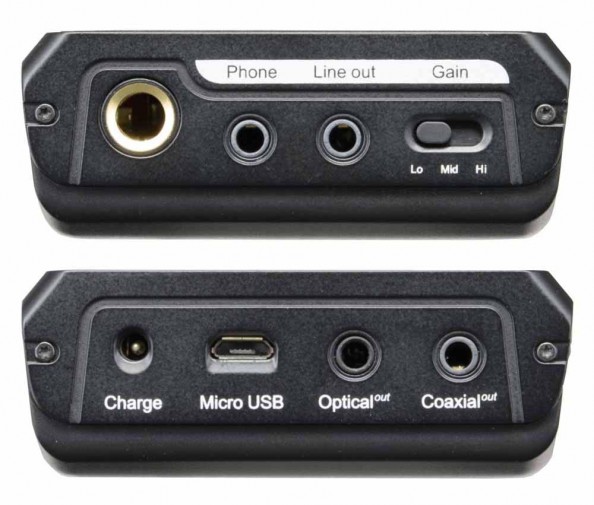
The design is not the best that I have seen. The volume rocker is usually on the left side on most devices and it is on the right with the HDP-R10. There is a 1/4 (gold plated?) jack and a 3.5mm jack which makes things a lot more convenient. It also has a line out and 3 gain switches as well as optical and coaxial outputs which I do not use but the more functions the better right?
The inbuilt memory is 64GB and it accepts 32GB Micro SD cards but you can use a 64GB one formatted to FAT32. The battery is stated to last 10 hours but I often get around 12 hours playing 16 bit music. I find that it is perfectly sufficient but it may be a bit too little for long plane flights. I'm not sure why iBasso decided to make this an Android device and I believe that most people will not use most Android functions such as apps. Overall, the design is pretty good except for its huge size.
Here are some pictures:
Packaging & Accessories
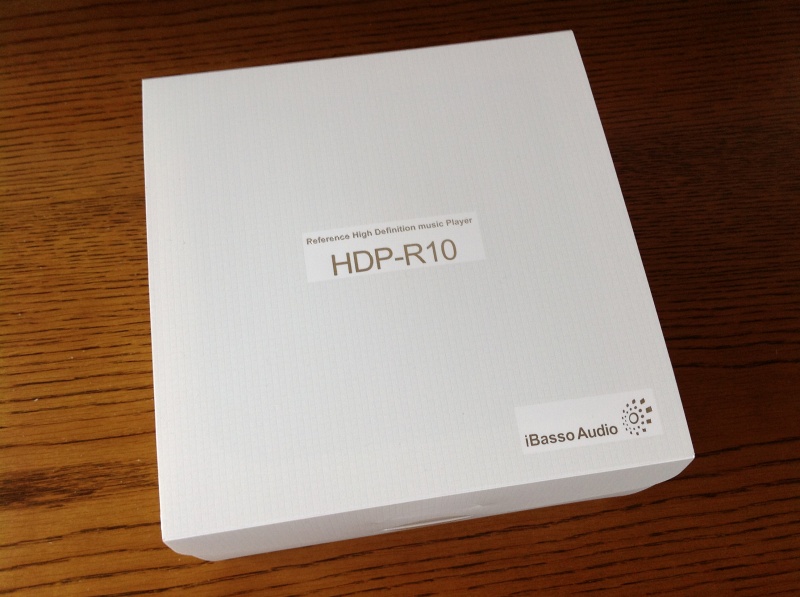
It came with a pretty looking white box which which is sealed with a piece of tape. Upon opening it, you are greeted with the HDP-R10 surrounded by soft foam covered with a soft, silk like purple cloth. It is an expensive player and the packaging certainly reflects that. Below, a compartment slides out and there is a nice USB to Micro USB cable and a charging cable that was with the Japan socket. I had to get an adapter thing to use it in Australia. There is a user manual in Japanese which I cannot read and that is about it. Nice and simple. iBasso included all the necessary features on the actual player and didn't waste their time on unnecessary accessories that nobody was going to use. You can buy a case, stand and screen protectors separately.
Soundstage
The soundstage is absolutely amazing on these. the stage width is around 5 times as wide as my Samsung Galaxy S3 with Poweramp and everything is placed very well. This is perhaps the biggest soundstage in a DAP.
Internal DAC
This uses the ES9018 DAC that is popular in many expensive home set ups. It is, one of the most expensive if not the most expensive DAC chip on the market. In a word, it is wonderful. I don't mean that it is just better than say a DAC on your phone or your cheaper DAP. I mean that playing music on my phone sounds grainy in comparison. The background is completely black and I can hear minute details that I just can't on cheaper DAPs. The most noticeable difference is the bass and how it seems to be faster than on other more economical DAC chips. For those who don't believe that DACs make a difference, try this. I've seen some people stack an external DAC on and I've never really gotten the point of it. I think that the internal DAC is better than all portable DACs including the Algorythm Solo -DB with an iPod Classic. This is the chip that it uses:
Internal AMP
This DAP has a great amp and uses the 627 op amp and it is said to be able to power 600 OHM phones well. Many people said that they drove the HD600 and HD650 with ease and they are both 300 OHMs. I can push some of my headphones to sound like speakers. I have no doubts at all about the driving power of this. The internal amp does reduce hiss by a lot and there is none detectable at normal listening levels. It also refines everything and I feel like this really add a bit of detail.
Sound
Bass
The bass is very neutral and it reproduces deep bass extremely well.The detail in the lower region is really incredible. With lesser players, drum hits were just a sound, but now, they are textured and you can actually hear them vibrating after every hit. Bass guitars are so realistic and you can actually hear every individual string plucked and the air around them when they vibrate. The bass trumpets are hyper detailed and you can hear the person taking a breath easily. Woodwind instruments are also reproduced very realistically and the bass detail is simply the best that I've heard, surpassing the DX100, AK100 and many other ToTL DAPs.
Midrange
These are a tad bit mid heavy and in a good way. It is great for vocals, but it won't hide any flaws and it utterly revealing. If sibilance is present on the track, the HDP-R10 won't help reduce it. FLAC tracks by Susan Boyle are hauntingly good and with the right headphone or IEM, it really does sound that she's right in front of you. Now that we've established that vocals are absolutely awesome, let's move on to midrange instruments such as pianos, violins, guitar and the like. I have never really been truly impressed by the way that a portable player presents piano, but Hibino has done it. Pianos, violins and other instruments sound so real that if you are listening to classical music, you really do feel like you are in a concert hall listening to a live performance.
Treble
The treble, like all the other frequencies are stunning. Cymbals are rendered superbly and the decay is just right. There is just enough sparkle to make it neither dull nor sibilant. Woodwind instruments are extremely realistic and detailed and with good headphones, you can actually hear the spit from the performer's mouth on well recorded tracks. If you have actually heard a trumpet in real life, you will be amazed how well the HDP-R10 can reproduce it. Compare the HDP-R10 to lesser players, an you will think that other players sound thin and plain bad in comparison. Even when I compare this to the DX100, this wins by a bit and you can tell how it is mire detailed and overall just more realistic.
Comparisons
Coming soon
Conclusion
I know that I used the words realistic and others many times, but that's really how you can describe it. It is just so realistic, like there are people performing in front of you. There are hardly any faults for sound quality and you'd really have to be nit picking to find a real fault in sound as it just sounds so great. However, not everything is good about this player. The major downside for me is size. I'd happily pay twice as much for this if this was half as thick, had 15 hours of battery life, can be charged via USB and was just about bug free. I do feel like with every purchase of the HDP-R10 and DX100, iBasso/Hibino Intersound should at least include a nice case and a screen protector. About the pop and 5 second delay problem, Hibino Intersound said that they will probably release a firmware update in the near future that will fix these issues. So is this an end game DAP? For me, yes, until something that meets all my requirements above comes out. I was looking at the HM-901, but I decided that no touchscreen and the wheel thing would be too hard to navigate, so I'm sticking with my HDP-R10.